
Master New Skills Today
Browse through our extensive catalog of expert-led courses. Designed for professionals seeking real-world impact.
Directional Drilling
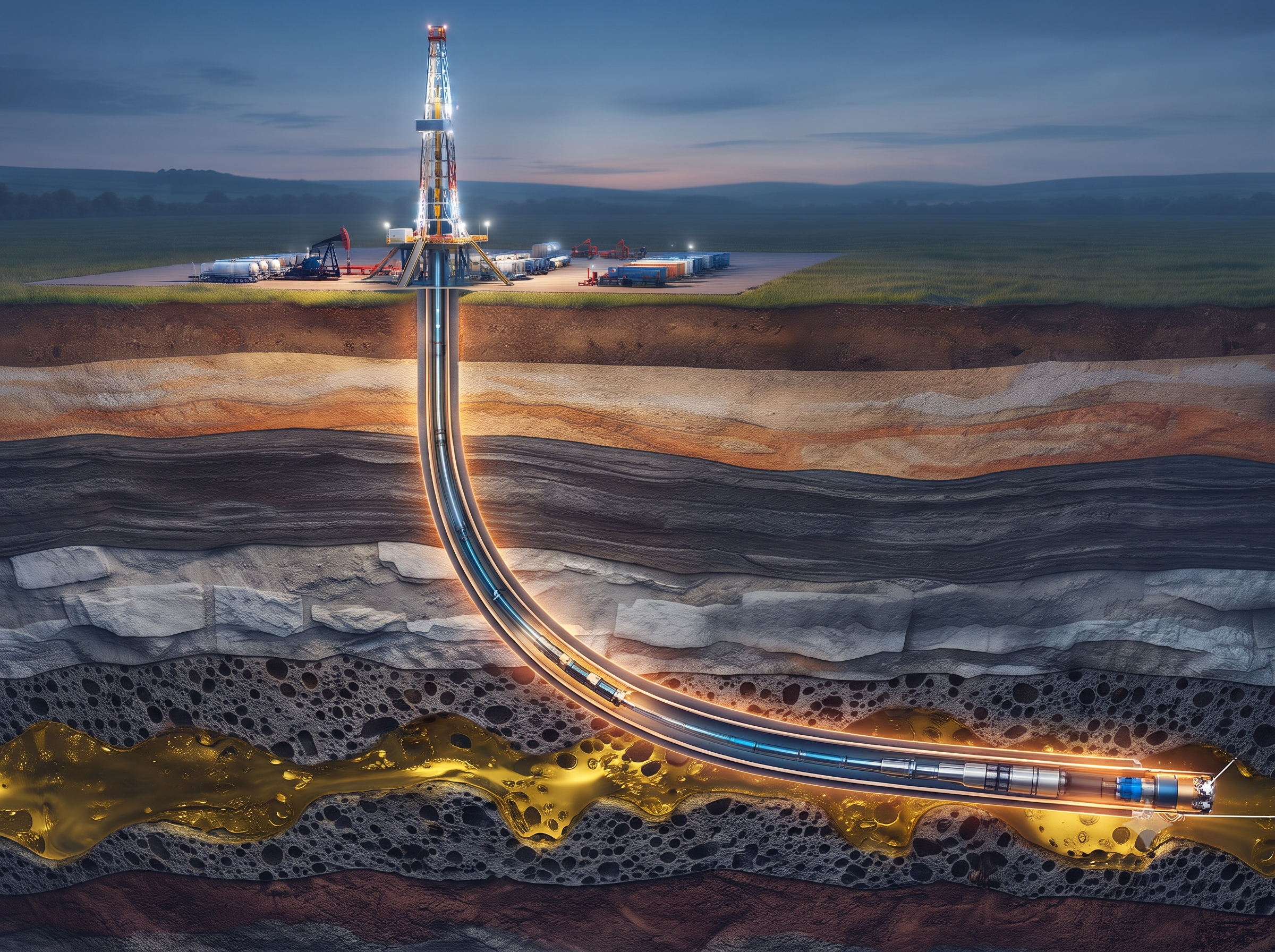
Course Objective:This comprehensive course equips learners with in-depth knowledge of DirectionalDrilling concepts, tools, and techniques. It emphasizes real-world applications indrilling operations and ensures a thorough understanding of well trajectory planningand downhole dynamics.Prerequisites:• A basic understanding of oilfield operations and drilling techniques.• Familiarity with subsurface geology and well construction fundamentals isrecommended.Importance of Learning Directional Drilling:• Career Growth: Mastering directional drilling opens opportunities to work as a Drilling Engineer, Directional Driller, or Consultant in the oil and gas sector.• Increased Demand: With advanced drilling technologies, directional drilling experts are highly sought after by global oil and gas companies.• Technical Expertise: Gain proficiency in handling complex well trajectoriesand drilling challenges, making you a valuable asset to employers.• Enhanced Problem-Solving Skills: Learn to address issues like stuck pipe, hole cleaning, and collision avoidance in directional drilling.Agendas:Module 1: Fundamentals of Directional Drilling• Introduction to Directional Drilling- Overview and importance in modern oilfield operations.• Types of Directional Wells- Horizontal, multilateral, extended reach, and S-shaped wells.• Directional Drilling Terminology- Understanding key terms like KOP, azimuth, inclination, and doglegseverity.• Basics of Well Trajectory Planning- Overview of planning geological targets and well paths.Module 2: Tools and Equipment in Directional Drilling• Bottom Hole Assembly (BHA) Design- Components and configurations for different well profiles.• Measurement While Drilling (MWD)- Basics, data transmission, and interpretation for trajectory control.• Logging While Drilling (LWD)- Formation evaluation and real-time decision-making.• Drill Bit Selection and Usage- Types of bits for directional wells and their performance factors.Module 3: Well Trajectory Planning and Execution• Advanced Well Planning- Determining KOP, build-up rates, and drop-off points.• Deflection Tools and Techniques- Rotary steerable systems, mud motors, and stabilizers.• Survey Techniques and Calculations- Inclination, azimuth, and well deviation analysis.• Anti-Collision Strategies- Planning techniques to avoid collision risks in crowded fields.Module 4: Advanced Directional Drilling Techniques• Extended Reach and Multilateral Drilling- Execution strategies and challenges.• Complex BHA Configurations- Advanced tools like high-torque motors and RSS.• Drilling Challenges and Mitigation- Addressing stuck pipe, lost circulation, and hole cleaning issues.• Real-Time Data Monitoring- Optimizing operations using software and analytics.Module 5: Applications and Case Studies• Case Studies- Analysis of successful directional drilling operations.• Environmental and Economic Impact- Reducing environmental footprint while improving cost-efficiency.• Emerging Trends in Directional Drilling- Automation, machine learning, and AI-driven systems.• Practical Project- Simulated exercise in planning and executing a directional well.FAQsWho is this course for?This course is ideal for petroleum engineers, drilling supervisors, and oilfield professionals seeking to enhance their skills in directional drilling.Are there any certifications provided?Yes, a completion certificate will be provided after successfully finishing the course.Will I have access to recordings?Yes, recordings of all live sessions will be accessible for later review.Can I access the course if I miss a live session?Absolutely! You can catch up with session recordings at your convenience.Do I need prior experience in drilling?While prior experience is helpful, the course starts with foundational concepts to accommodate beginners.What career roles does this course prepare me for?It prepares you for roles like Directional Driller, Well Planner, and Drilling Engineer.What is the course fee, and how do I pay?The course fee is 2500 INR or 70 USD. You can pay online via our secure payment systemportal during registration.Are there practical exercises included?Yes, the course includes interactive exercises, case studies, and real-world problem-solving.
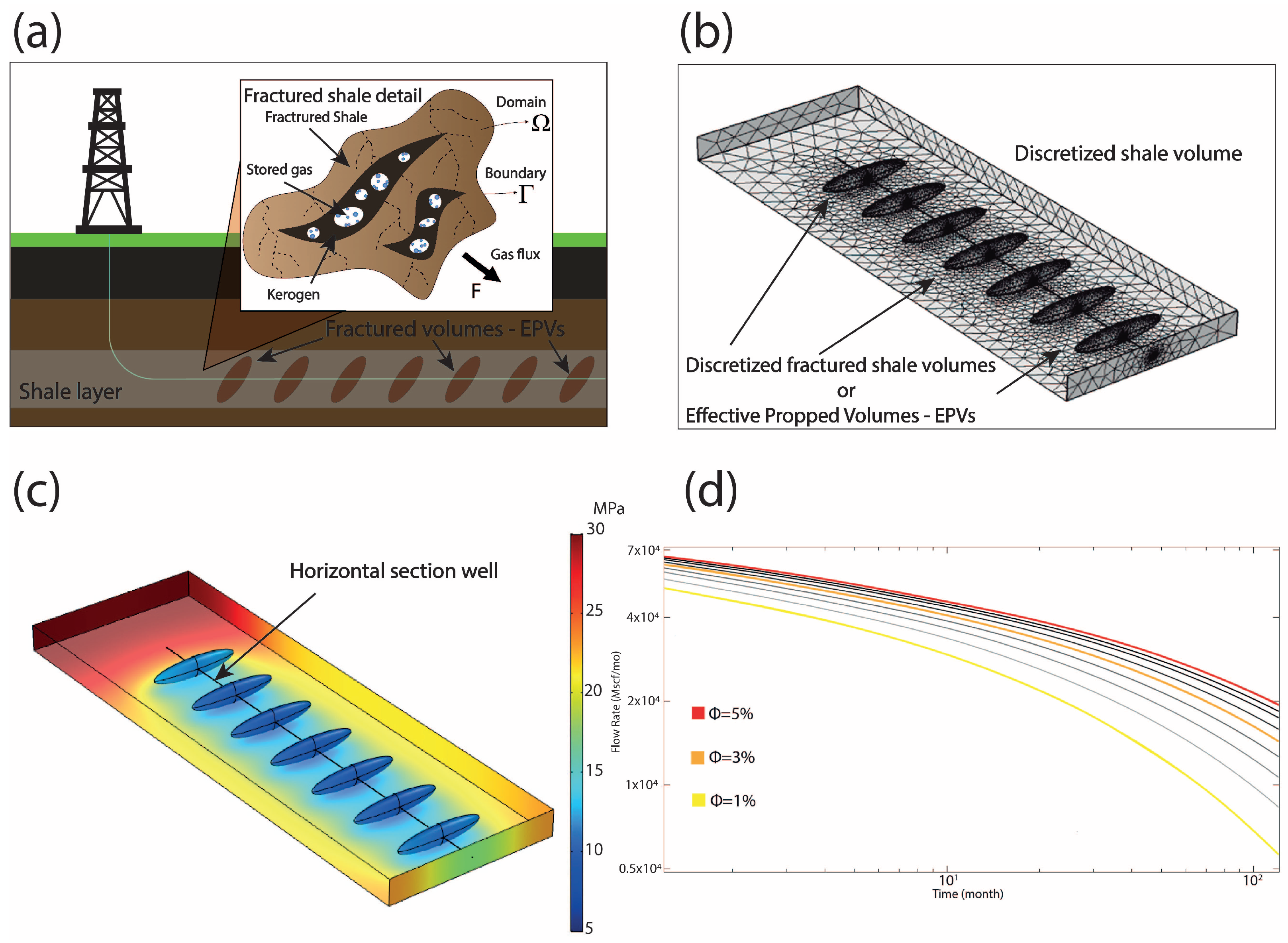
Evaluating Unconventional Resources Using Decline Curves Analysis, Optimizing Production Using Horizontal Well Fracturing
Course Overview:Unconventional reservoirs can add huge amounts of additional energy to our world resources bases like organic shale in terms of Shale gas, shale oil, tight gas and coal-bed methane. These unconventional reservoirs can transform the global energy market through advances in reservoir characterisation, drilling, and completion technologies. Reservoir characterisation and properties have a great influence on the exploration and development processes; it is not through a single discipline that a full description of the reservoir characteristics can be obtained, especially for unconventional reservoirs. Moreover, unconventional sources can be defined by their difference in the intrinsic of their geological settings, origins, and tapping mechanisms, thus having different methodologies for exploration, production, and development methods. Therefore, it is very important to express and identify the necessary parameters for the unconventional characterisation of thesereservoirs for defining reservoir rock and fluid properties.Who should attend?Participants should have a foundational background in reservoir engineering, petroleum geology, and productionoperations. Proficiency in decline curve modelling & reservoir characterisation is essential. Understanding the challenges of unconventional reservoirs, including complex geological formations, is crucial. Additionally, familiarity with horizontal well fracturing techniques for production optimisation is a prerequisite.Program Content:Day 1:• Conventional vs Unconventional hydrocarbon reservoir.• Geology of Unconventional Hydrocarbon Reservoir.• Petrophysical Properties of Unconventional Reservoir.• Contingent Resources and Reserves.Day 2:• Critical Evaluation parameters.• Different Methods for TOC Calculation.• Different Logging tools that will help with Unconventional reservoir evolution.• Drilling & Completion strategy.Day 3:• Completions Systems• Fracturing Basics• What does fracturing do?• Importance of fractureconductivity and dimensions.• Key challenge in tight gas reservoir.Day 4:• Horizontal & Multi-Fractured wells.• Multi-stage fracturing types• Case studies.Day 5:• Decline curve analysis technique.• Arp’s decline curve model.• Duong’s model, Logistic GrowthAnalysis model (LGA).• Power Law exponential (PLE)model.• Production forecastingFAQs:1. When is the course commencing?Ans: Expected date – Coming Soon2. What are the course fees?Ans. Fees –200 USD & 15000 INR (Limited Offer for first 10 Participants)3. What will be the medium of language for the training?Ans. English4. Will a certificate be provided?Ans. Yes5. What if I missed any live sessions?Ans. We will be providing the recordings of the whole live session of the trainingalong with materials for lifelong.6. Why should we join?• Holistic Skill Development: Gain proficiency in SQL, Power BI, and Tableau, equipping you with a comprehensive toolkit for data analysis and visualisation.• Practical Application: Learn through hands-on projects and case studies, ensuring that you can apply your knowledge effectively in real-world scenarios.• Career Growth: Enhance your employability with sought-after skills in data analysis and business intelligence, opening up diverse career opportunities across industries.• Expert Guidance: Benefit from instruction by experienced professionals who provide personalised support, ensuring optimal learning outcomes.• Networking Opportunities: Engage with peers and industry professionals, fostering valuable connections that could lead to collaboration opportunities and career advancement.
Reserve Estimation & Classification
OutlineThe course will provide an understanding of estimation and standardised classification of petroleum reserves, which is broadly adopted by all oil and gas operators in order to evaluate projects, create business plans, and report the volumes as a standard practice to give a practical picture of the company's performance to the stakeholdersThe course will also entail different methods of estimating hydrocarbons and discuss the classification frameworks covering a range of uncertainties and degrees of maturity for economic development. Students will be provided with Excel spreadsheets for exercises.PrerequisiteFamiliarity with Petroleum / Reservoir Engineering concepts is desirable but not an absolute necessity. Students and professionals are welcome to join the course and learn about the upstream production engineering domain.Program OutlinesIntroduction to Reserves Estimation and ClassificationDifferent methods and application of reserves estimation (Exercises on Excel sheets) - - Volumetric- Decline curve analysis- Material balance calculations- Resources Categorisation with definition and guidelines- Assessment of Commerciality
Artificial Lift Modeling, Reservoir Deliverability & Well performance
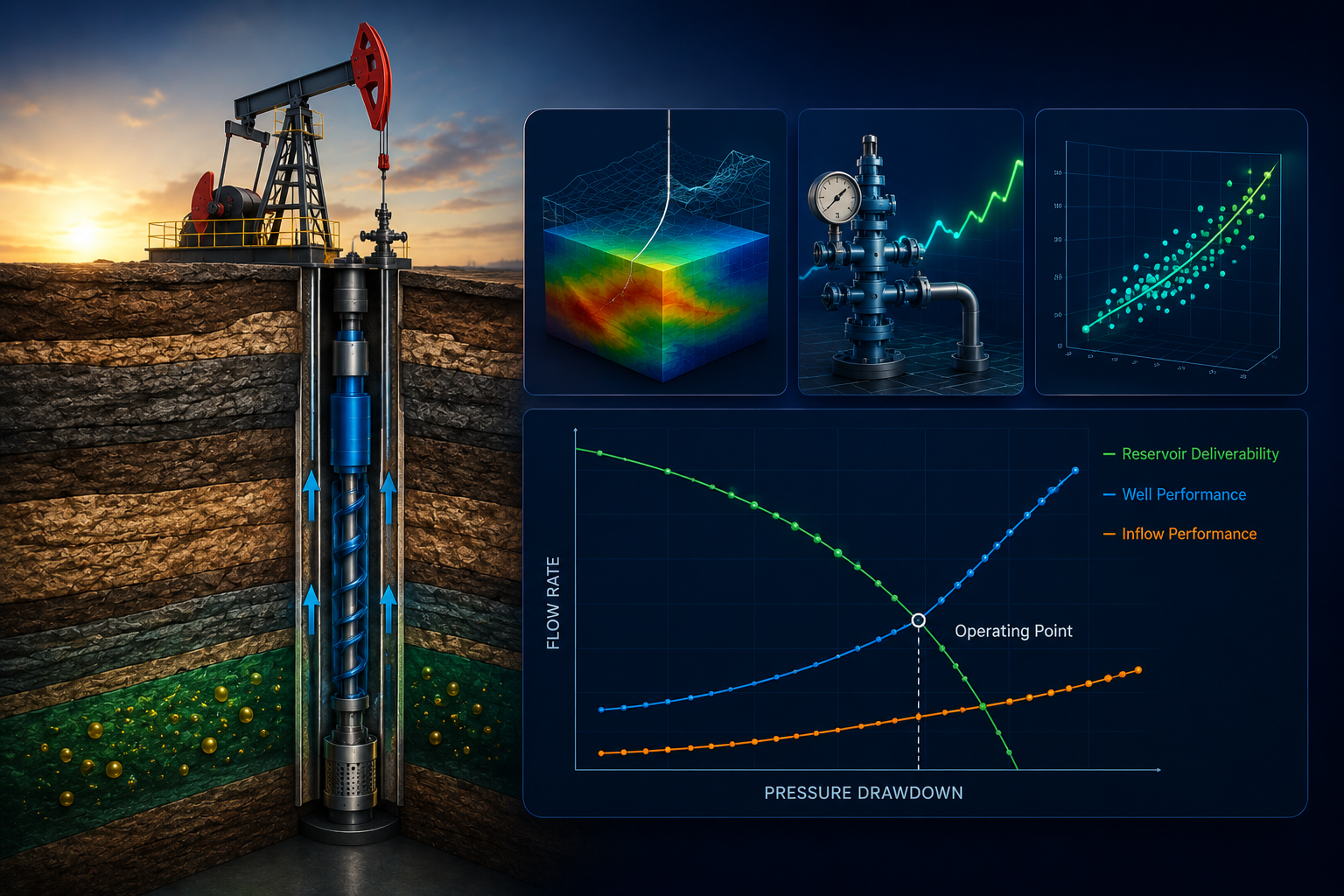
ObjectivesThe course will provide an understanding of petroleum production systems, reservoir deliverability and well performance concepts,and evaluation of results based on different popular/ standard methods used in the industry. The course will also entail different artificial lifts used in the industry laying out the concepts & functions of every component of each of the artificial lifts.Students will be provided Excel spreadsheets to understand and calculate different variables as an output & analyse the impact on the production rate, facilitating decision making.PrerequisiteFamiliarity with Petroleum Engineering concepts is desirable but not an absolute necessity. Students and Professionals are welcome to join the course and learn about the upstream production engineering domain.Program OutlinesDAY 1-Petroleum Production System-Properties of Oil and Gas-Reservoir and Well Deliverability Performance-Inflow Performance Relationship and Outflow PerformanceDAY 2Overview of Artificial Lift Methods.- Beam Pumping-ESP-Plunger lift-Gas LiftAdvantages and disadvantages of the differentartificial lift methods.Artificial lift screening-Selection criteria of the lift system.DAY 3Electrical Submersible Pump (ESP)ESP componentsDownhole components- Surface componentsESP Design- calculationsDAY 4Sucker Rod Pump (SRP)Rod Pump Components and functionsDynamometer cards InterpretationSRP design- calculationsTroubleshootingDay 5 GAS LIFTSComponentsMechanismGas Lift design- calculationsLimitationsDay 6Plunger lift- Components-MechanismPlunger lift design-calculationsDay 7Basics of Economics for Artificial Lift SystemsCase Study- selection of artificial lift based on economics
Reservoir Engineering, Modeling & flow Simulation
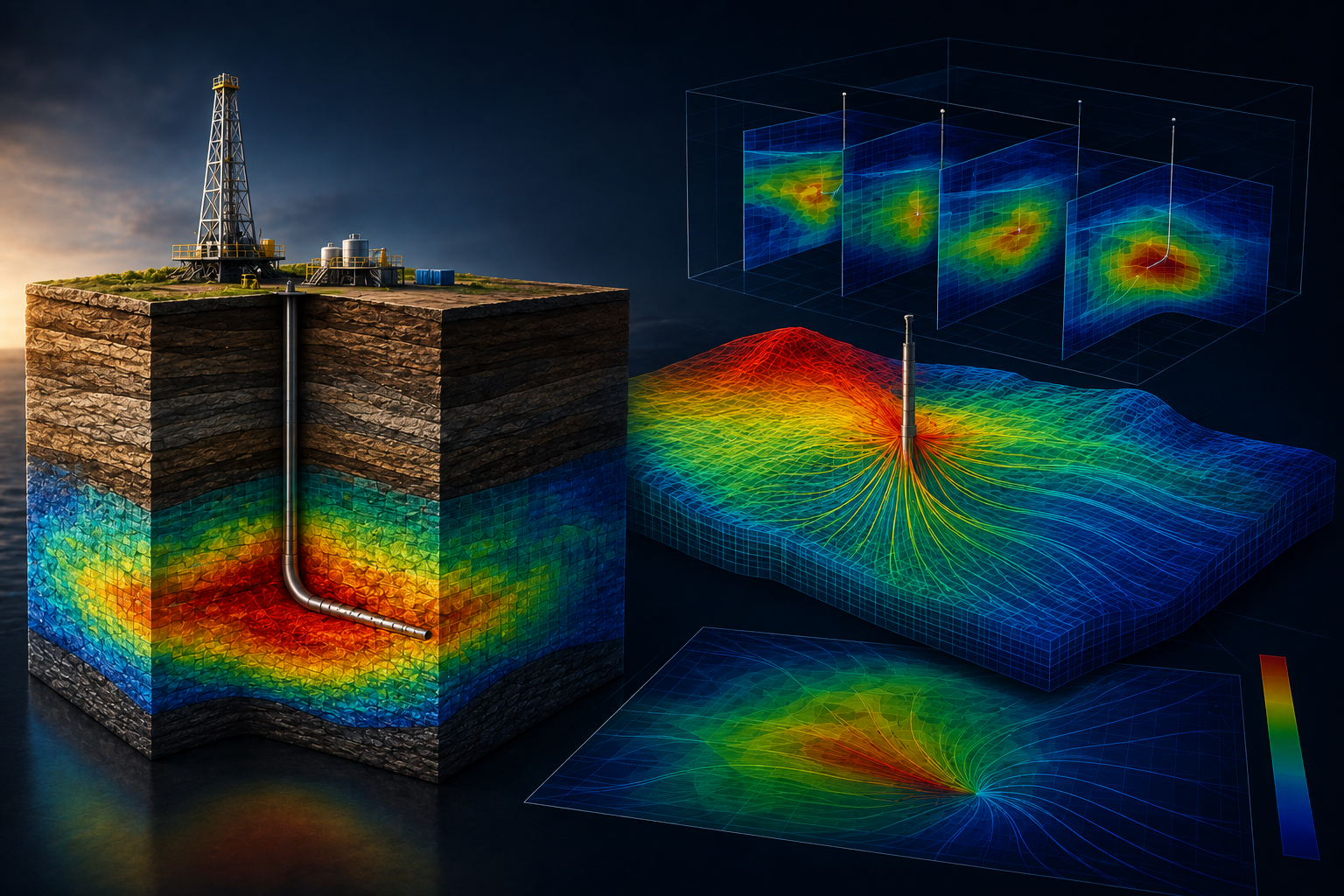
Training IntroductionReservoir engineering plays a vital role in the offshore oil and gas industry. It allows us to assess the scale of oil and gas deposits, and maximise the economic return from safely extracting them.Join our online Reservoir Engineering course and learn to :- Assess subsurface hydrocarbon reserves in our online Reservoir Engineering course.- Participate in real-world asset planning, simulations, & modelling.Agenda DiscussedSection A- Introduction - What is Reservoir Engineering (RE)?- Where is RE in the grand scope of the O&G industry?- What are the "types" of REs?- What are various RE tools and where & how they are used?Section B- 3D Dynamic Simulation (6 hrs)Introduction- Input Data- Tools - Software- Model Preparation- Model Initialisation- History Match- Forecast / Predictions- Uncertainty Analysis & Optimisation- Automatic History Match- Conclusion
Data Science & Its Application for Oil & Gas
Benefits of Joining The ProgramFlexible & blended learning modelLearn with the convenience and flexibility of recorded and live sessions. Because most working professionals want to participate in the program, live sessions will only be held on weekendsDiscussion ForumParticipants will get a discussion forum after joining the program where they can ask their questions directly to facultyHands on experience on Oil & Gas ProjectsA variety of different Oil & Gas case studies and projects were discussed to provide clear understanding of the used cases in Oil & Gas IndustryNo Prior coding experienceCoding is not required since we are starting from scratch.Course Journey StatisticsPython FundamentalDatabase Management Data AnalyticsData Mining Application Machine LearningDeep Learning with TensorFlow and KerasData Science & Machine Learning Projects

Sequence Stratigraphy in the era of Digitalization
Target AudienceAspiring, future leaders in the oil and gas industry who want to acquire skills beyond the academic and technical and obtain insights into the commercially orientated analysis.Who should attend?- Geologists- Geophysicists- Petrophysicists- Engineers who wish to develop a better understanding of the factors that control distribution, reservoir connectivity and compartmentalisation of a particular reservoir. The course assumes no prior knowledge of sequence stratigraphy, which is why we strongly urge engineers to enrol.BENEFITSMachine learning Internship opportunityafter the internship.Practical internship with fields case studiesWorking on projects of your domainRecorded session and certificate of completionINTERNSHIP OBJECTIVETo develop a thorough understanding of the relative sea-level changes and their effect on the distribution of source and reservoirs rocks.To create an awareness amongst participants about the limitations of lithocorrelation and the benefits ofchronocorrelation.To prepare participants for realistic facies modelling in the creation of geomodels
Fundamental to Advance Well Control
Course ObjectiveThe Advance Well control Course delivered basic to advanced methods in dealing Well control in a systematic way. The candidate knows procedure as well as the equipment, which not only covers the conventional IADC/IWCF syllabus way to control well, but also covers aspects of non-conventional bull heading, volumetric, and PMCD methods. Above than method,s its also include blowout containment planning/procedure/equipment.Advance Wellcontrol Syllabus AgendaPrinciple & ProcedureBasic Well Control Fundamental Volume- Basic Area- Volume Annular- Internal & Annular Capacity- Pump Output- Annular Velocity- Tripping Dry & Wet- Slug CalculationBasic well control Fundamental-Pressure- Importance of Pressure- Hydrostatic Pressure- U-tube concept- Bottom Hole Pressure (BHP),- Equivalent Circulating Density (ECD)- Leak Of Test (LOT)- MAASPWell Shut-In- Causes of Kicks- Early Kick Warning- Positive Kick Sign- Well Shut-In Line Up and Procedure- Recording Shut In Drill Pipe & Casing pressure- Kill Mud Wt Calculation- Formation Pressure Calculation- Height of Influx and gradient of Influx Calculation- Gas Migration Behavior Open and Close- Trip and Riser Margin- Slow Circulation Rate (SCR)- Choke Line Friction Losses (CLFL)Well control Methods and Problem- Objective and Methods- Drillers Method- Wait & Weight (W&W) Method- Drillers vs W&W Method Comparisons, Casing Pressure &Casing Shoe Pressure, Advantages and Disadvantages- Kick Influx Behavior- Stripping and Volumetric Method- well control Operational ProblemsKill Sheet Exercise-Filled and Gauge Kill sheet golden rules with examplesShallow Hazards- Shallow Gas- Hydrates- Procedure/Equipment/Planning Shallow hazard- Deepwater vs Onshore Shallow HazardBarrier- Significance primary/secondary/tertiary barrier policy- Drilling & Completion Operational Phase exerciseUnconventional well control Procedure with Case- Stripping,Sunbbing- Volumetric- Bull headingWell control EquipmentSurface Equipment- Diverter System- Annular Preventor- Rams Preventor- Drilling & Riser Spool- Choke Manifold- Gas Seperator- Hydraulic Control System- Drill string well control EquipmentSubsea- Subsea Challenges- Subsea BOP Control SystemTertiary well control -Blowout Containment- Procedure, Planning- EquipmentWell control SimulatorWell control API Std
Well Intervention, Fishing & Smart Completions
Course ObjectivesThis course aims to provide new learners and professionals with a solid understanding of well intervention techniques, including planning and execution, and the importance of workover operations. It will cover the analysis of workover failures through case studies, offering valuable lessons. Participants will gain insights into fishing operations and milling, alongside well stimulation techniques like matrix acidizing andhydraulic fracturing. The course also introduces advanced smart completion technologies to optimize well performance and manage complex reservoirs effectively.Benefits of LearningSkill Enhancement: Master advanced well intervention and completion techniques, making you a valuable asset and opening doors to specialized roles.Industry Relevance: Stay updated with the latest technologies, ensuring your expertise remains relevant and enhancing your employability.Leadership Opportunities: Prepare for leadership roles by learning best practices and real-world case studies to guide teams and lead projects.Professional Recognition: Gain recognition and credibility within the industry, leading to career advancements and professional accolades.Prerequisites:Whether you're new to the field or a seasoned professional, this course is designed to accommodate learners at all levels without any prerequisite experience. All you need is a keen interest in the oil and gas industry and a willingness to learn from scratch.Topics to be covered:Day 1: Well Intervention1. Well Intervention objectives.2. Well Intervention Requirements3. Standard Operating Procedures4. Types of Well Intervention JobsDay 2: Workover Operations1. Why do we need workover?2. Workover Planning, Design and Execution3. Workover Failures: Case Studies and Lessons LearntDay 3: Fishing Operations1. Fishing Operations: Planning and Design, Job Execution and case studies2. Milling: Tool Selection, Techniques, Case StudiesDay 4: Well Stimulation Techniques1. Matrix Acidizing2. Hydraulic Fracturing3. Acid Fracturing4. Novel Techniques and Case StudiesDay 5: Smart Completions1. Why do we need Smart completions?2. Optimizing Well Trajectories3. Multilateral Well Completions4. Unconventional Reservoir Evaluation5. Slim WellsFrequently Asked Questions:1. Who is this course for?A. This course caters to individuals at all levels of expertise, from newcomers to seasoned professionals, who are interested in gaining a comprehensive understanding of well intervention, fishing operations, and smart completions.2. Do I need any prior experience in the Oil and gas industry ?A. No prior experience is required. This course is designed to teach participants from scratch, providing a foundational understanding of well operations and completion techniques.3. What can I expect to learn from this course?A. Participants will learn about various well intervention techniques, workover operations, fishing operations, milling, well stimulation techniques, and smart completions. The course covers both theoretical concepts and practical applications through case studies.4. Will I receive any certification upon completion of the course?A. Yes, participants will receive a certificate of completion.5. How can I enroll in the course?A. Enrollment details and registration instructions can be given by Edvantage team. The course fee is 7500 INR or 100 USD.7. Will study materials be provided?A. Yes, participants will receive study materials including presentations,handouts, and additional resources to supplement their learning experience. Additionally, recorded sessions will be available for review at any time during and after the course.
Advance Well Engineering
ABOUT THE COURSEWell engineers who are responsible for technically evaluating and authorising programs for drilling or working over wells must have the required skills and competencies to safely design wells of varying nature.They also need to be able to confirm that well delivery and intervention programs generate intrinsic well control assurance. Such work programs must establish, verify, monitor and maintain suitable and sufficient barriers for the entire well lifecycle – from spud to abandonment.Well engineers must also be able to select a suitable drilling or workover rig, capable of safely performing the work within its operational envelope. Advance Well Engineering is basically based on pore pressure, kick tolerance, casing functions, casing design and cementing. It is sometimes related to drilling and petroleum engineering. A valid objective of the well-planning process is to minimize the cost of the well without jeopardizing the safety aspects.This intensive 6-week program has been put together to cover Advanced Well Engineering topics. The program intends to uplift the knowledge and skills for Students and Professionals, who will directly involve in well designing. It will also benefit staff that are or will be working as a member of a day-to-day operationsteam.It is delivered through presentation of a series of interactive lectures, videos and animations, case studies, simulated drilling scenarios and facilitated study group discussions supported by technical reviews. Underpinning the course is a team-based well design project.LEARNING OBJECTIVES-Guidance under one world class best instructor-Practical explanation on each topic with theory for strong fundamental Course Material based on API, Norks, ISO Standard (Will be share these standard) as well multinational co. manual- Drilling downhole challenges & Mitigations like HPHT, Salt, Hydrate, ERD, Sinkhole.- Challenge's & Mitigation drilling in Land, Shallow and Deepwater environment. -Latest technology application to overcome challenges.- How to use Well Engineering Software, Theory covers input & output with practical examples. PREREQUISITESYou could be involved in providing critical support from our global exploration projects, designing, building, and maintaining different types of wells all over the world. To do this you'll need a high level of technical competency, passion, and a collaborative work ethic.TOPICS TO BE COVERED-Subsurface Significance for Well Engineering -Casing Design -Cementing Design -Drilling Fluids -Rig Hydraulics -Drilling Bits -Directional Drilling -Stability & Hole Problems -Determine Well Cost -Blow Out Preventor (BOP)
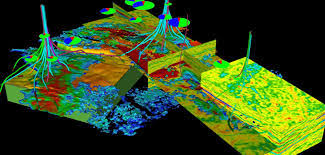
Reservoir Surveillance & Tight Reservoir
Course Objectives:Edvantage Learning is coming up with comprehensive one-week course provides a deep dive into the principles and practices of reservoir surveillance, with a particular focus on tight unconventional reservoirs. Participants will learn how to develop effective surveillance plans, gather and analyze critical data, and apply advanced tools and techniques to optimize reservoir management and decision-making.Learning Objectives: - Understand the fundamentals of subsurface engineering and reservoir surveillance - Develop effective reservoir surveillance plans aligned with asset management objectives - Apply data gathering techniques and advanced tools to gather reliable, high-quality data - Characterise tight unconventional reservoirs and build dynamic models for field development - Conduct economic analysis and risk assessment for tight oil unconventional reservoirs.Prerequisites:This course is designed for both freshers and professionals in the oil and gas industry. Participants should have a basic understanding of reservoir engineering and petroleum geology, but the course will provide a solid foundation for those new to the field.Benefits of Learning:Gain a comprehensive understanding of reservoir surveillance principles and practices.Learn how to develop and implement effective reservoir surveillance plans.Acquire skills in data gathering, analysis, and interpretation using advanced tools and techniques.Understand the unique characteristics and challenges of tight unconventional reservoir.Develop the ability to optimize field development and economic performance.FAQs:Who should attend this course?Professionals in the oil and gas industry, including engineers and geologists, as well as freshers looking to enhance their knowledge.What are the prerequisites?A basic understanding of reservoir engineering is helpful but not required; the course is suitable for all levels.Will there be hands-on exercises?Yes, the course includes interactive sessions and case studies to apply learned concepts.What is the course format?The course features lectures, discussions, and interactive activities.Will course materials be provided?Participants will receive course materials and access to session recordings for later review.Is there a certificate upon completion?Yes, participants will receive a certificate of attendance.Why I will join?Structured learning environment.Expert guidance from experienced instructors.Hands-on experience through case studies and interactive sessions.Networking opportunities with industry professionals.Access to study materials and session recordings.Confidence-building in reservoir management skills.
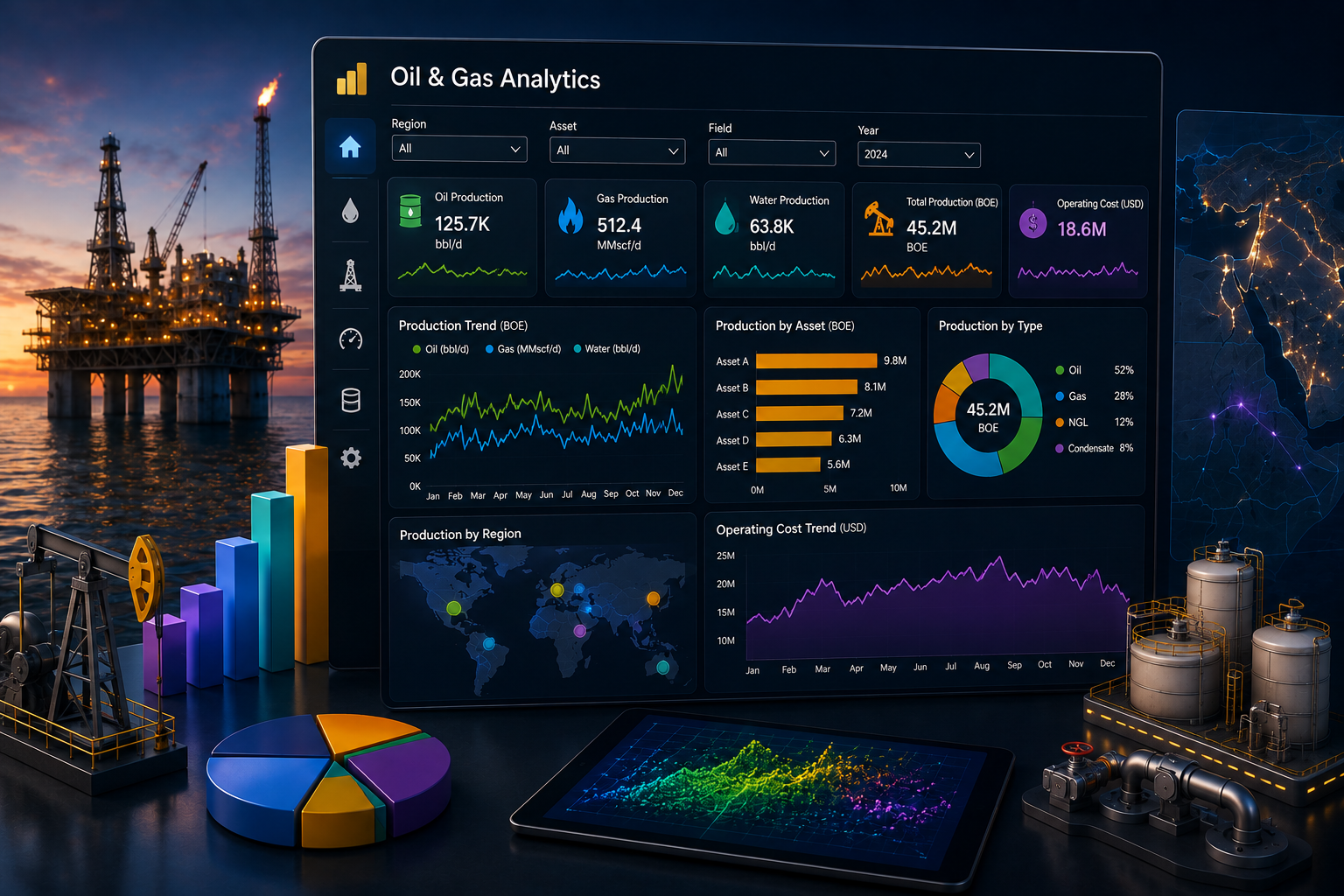
Power BI Essentials for Oil & Gas: Optimizing Drilling, Production, and Reservoir Management
Course OverviewThe course is being designed to equip professionals in the oil and gas industry with essential Power BI skills. The course focuses on creating dynamic dashboards, analysing drilling performance, optimizing production, and visualising subsurface data for better decision-making and operational efficiency. Learning Benefits:✓ Build interactive dashboards for drilling and production optimisation.✓ Visualize complex oilfield and reservoir data for insightful analysis.✓ Integrate real-time data from oil and gas operations for continuous monitoring.✓ Gain hands-on experience with Power BI tools tailored to the oil & gas sector. Who Should Attend? Oil & Gas professionals involved in drilling, reservoir, and production operations Engineers and data analysts aiming to harness the power of data-driven insights Managers seeking to implement dashboard-driven monitoring for better operational control Course Outline Module 1: Introduction to Power BIModule 2: Data Preparation and ModelingModule 3: Creating Drilling Optimization DashboardsModule 4: Reservoir & Oilfield Production DashboardsModule 5: Subsurface Data VisualizationModule 6: Advanced Power BI Features for Oil & GasModule 7: Publishing, Sharing, and Collaboration FAQs:Who is this course for?The course is ideal for oil and gas professionals, data analysts, and engineers looking to enhance their data visualization and analytics skills using Power BI. Will I receive study materials?Yes, all participants will get comprehensive study materials, including guides and datasets. Are recordings available?Yes, the course sessions will be recorded and available for future reference. Do I need prior Power BI experience?No, the course is suitable for beginners as well as those with basic Power BI knowledge. Is there a certificate upon completion?Yes, a certificate of completion will be provided at the end of the course. What tools do I need for this course?You will need access to a computer with Power BI Desktop installed, and internet access for the online sessions.
Geomechanics and its application in Drilling & Completion
About The Course This intensive 2-week program has been put together to cover “Geomechanics and its application in Drilling and Completion”. The program intends to uplift the knowledge and skills for Students and Professionals, who will be directly involved in well designing. It will also benefit staff who are or will be working as members of a day-to-day operations team. Once the understanding has been developed, it can then be used in a well-designed as part of an integrated process to minimise cost and maximise safety. Learning Objectives Recognize the significance of rock mechanics and petroleum geomechanics in development of hydrocarbon resources and other subsurface operations. Identify applications of geomechanics for optimization and riskmitigation for drilling and completion and frac operations. Use the basic terminology of petroleum geomechanicse.g., in-situ stresses, pore pressure, failure criteria, constitutive models, fracture networks, and several other terms. Describe the basic principles of rock mechanics and its problem-solving techniques for different geomechanical problems such as borehole stability, cementing, compaction and subsidence, caprock integrity, hydraulic fracturing and more. Course Outline Wellbore stresses Drilling Applications Drilling Fluid Applications Wellbore strengthening & Cementing Fracturing Technology Applications FAQs What will be the medium of language for the internship? English Will a certificate be provided? Certificates will be provided at the end of the training. Why we should join? - We will cover all geomechanical operation relation to drilling & Completion - Wellbore Strengthening & Stability - Technical Applications for different petroleum disciplines. - Drilling operation & Application and Wellbore stresses. - Presentation, recording of sessions, manuals will be provided. - Certificate of Completion
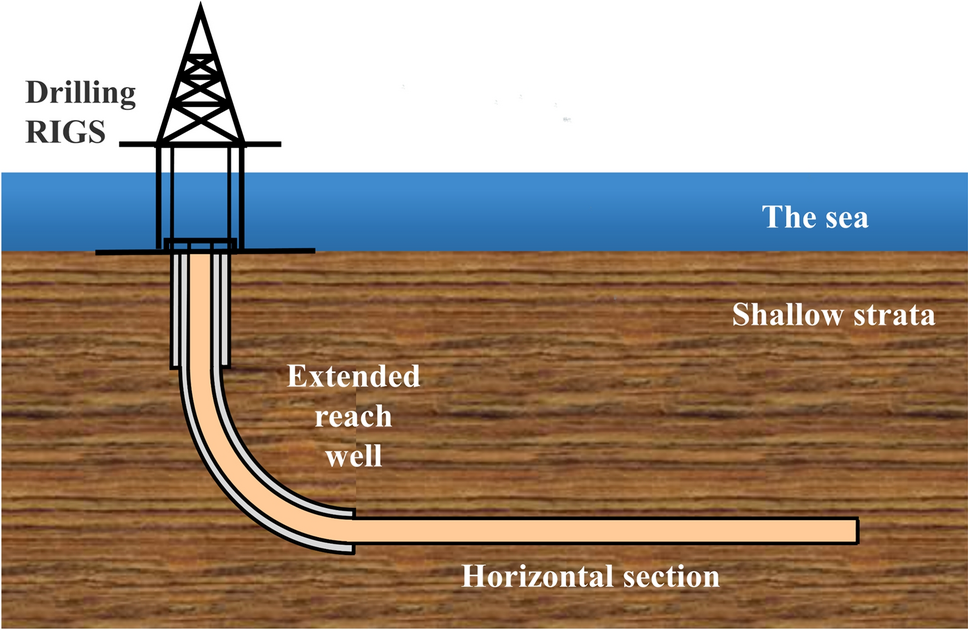
Extended Reach Drilling
ABOUT THE COURSEWelcome to the world of Extended Reach Drilling (ERD), a specialized field of drilling engineering that pushes the boundaries of well construction to access hydrocarbon reservoirs from extended distances. This course is your gateway to mastering the intricacies of ERD, where we will explore innovative techniques, advanced technologies, and best practices that enable the drilling of highly deviated and horizontal wells. In the oil and gas industry, ERD has become increasingly vital for tapping into reserves that were once considered out of reach. As we embark on this journey, you will gain a deep understanding of ERD principles, equipment, challenges, and the applications that have revolutionized the industry. Whether you are a seasoned drilling professional looking to enhance your expertise or a newcomer eager to explore this exciting field, this course will equip you with the knowledge and skills to excel in ERD projects.LEARNING OBJECTIVEERD FundamentalsWell PlanningDrilling Techniques and ToolsRisk AssessmentWellbore hydraulicsDirectional DrillingProject ManagementGeomechanics and wellbore stabiityCase Studies and SimulationsRegulatory CompliancesPREREQUISITES:For Freshers, a relevant educational background, basic math skills, and computer literacy are required. Professionals should ideally have industry experience and technical knowledge, along with strong math skills. Familiarity with industry software is a plus for both groups.TOPICS TO BE COVEREDUnique differences to conventional wellsWell Design & Planning Considerations for ERD WellsOperational Aspects in executing ERD wellsDirectional Drilling StrategiesSpecial challenges in cementingSpeciality tools for ERDCompletion & Workover for ERD wellsExample ERD WellsBest practicesNew technology
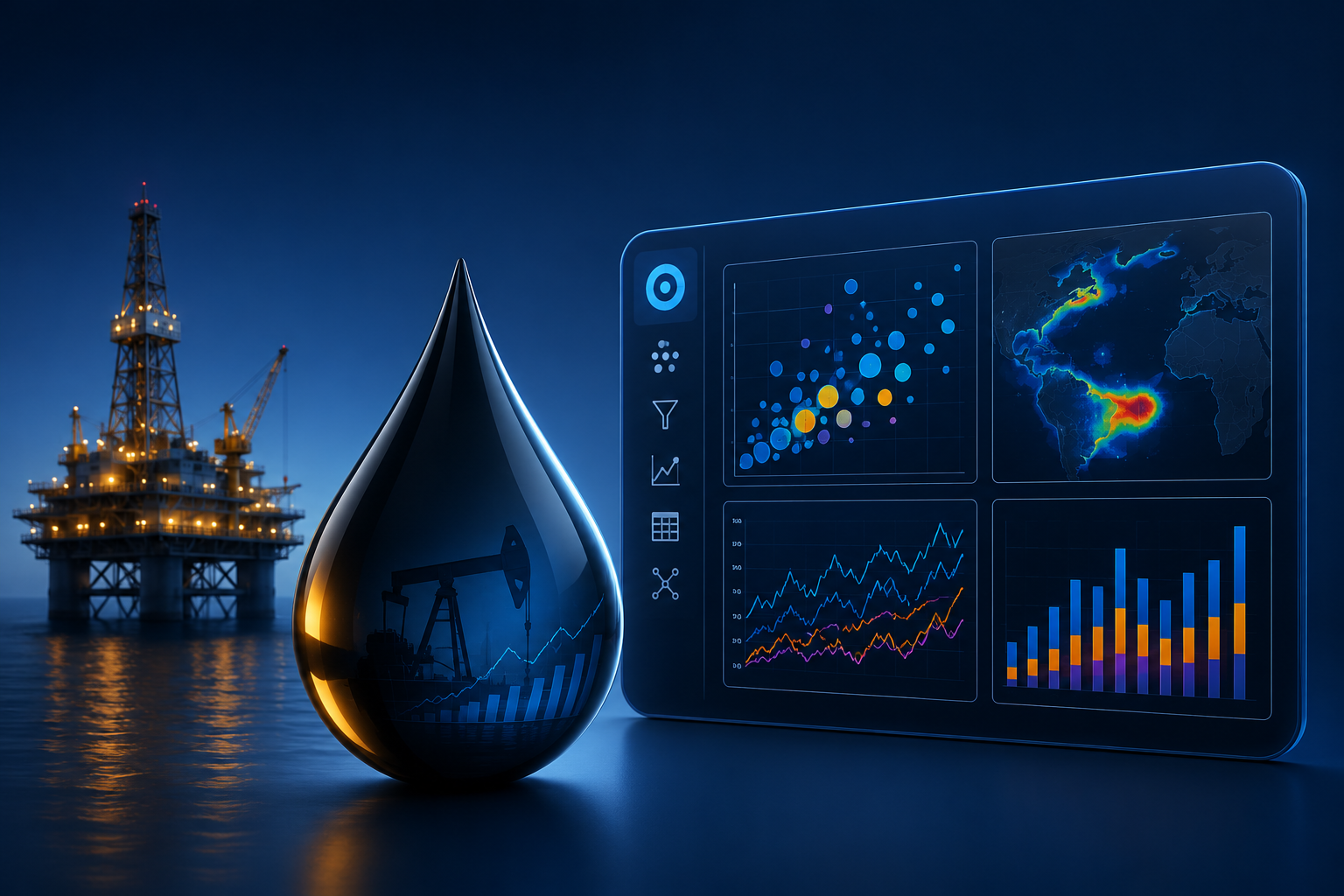
Analytics for Oil & Gas
Python Fundamentals using Oil & GasAnalytics for Oil & GASAnalytics projects for different petroleum disciplinesTime Series for Oil & GasOil & Gas Predictions & ForecastingModule 1 - Introduction to Python and Computer Programming PythonModule 2 - Data Types, Variables, Basic Input-Output Operations, Basic OperatorsModule 3 - Boolean Values, Conditional Execution, Loops, Lists and List Processing, Logical and Bitwise Operations.Module 4 - Functions, Tuples, Dictionaries and Data ProcessingModule 5 - Modules, Packages, String and List Methods, and ExceptionsContentsData Analytics for Oil & GasLanguaues & Tools[Python, SK Learn, Matplotlib, Matlab]Time Series in Oil & GasData Analytics Research ProjectsTrainee CustomProjectsFrequently Asked QuestionsWhy should I join your data science programme when there are so many others?There are other platforms that teach data science, but we are the only institute that offers accredited application-based data science training in the oil and gas industry.What if I don't have any prior coding experience? Can I Still join this course?Don't worry, we'll start from scratch. There is no requirement for prior experience.Will joining this program be beneficial to me because I am proficient in Python?This might help you readily comprehend the data science ideas underpinning oil and gas applications. You will receive many data sets for practice and analysis.Will there be an assignment?Yes, we’ll have assignment on weekly basis and final project at end of the program.Who can join this course?Undergraduate/Graduate or professional working in energy sector.

Learn Energy Data Analytics from Scratch
Why Learn Data Science in Oil and Gas ? Continuous job Cuts and lack of job opportunities in Oil & Gas sector Increasing Opportunities in Oil & Gas Companies. To increase work efficiency by using data science application Attractive Salary for Entry/ Experienced Level Engineers Benefits of Joining The Program Flexible & blended learning model Discussion Forum Hands on experience on Oil & Gas Projects No Prior coding experience Applications of Data Science in Oil & Gas Analyzing seismic and micro-seismic data Improving reservoir characterisation and simulation Reducing drilling time and increasing drilling safety Improved petrochemical asset management Optimization of the performance of production pump Improved shipping and transportation. Course Journey Statistics Python Fundamentals Data Analytics Machine Learning Data Science & Machine Learning Projects Frequently Asked Questions There are a lot of programs in data science why to join your program? There are lot of platform who teach data science but we are the only institute who provide certified application based data science training in Oil & Gas. I don’t have prior coding? So can I join this program? No worries we will start it from scratch. You don’t need any prior experience. Will it be helpful for me if I Join this program as I have good knowledge of Python? Well good this can help you to understand the data science concepts behind oil and gas application easily. You will get different data sets for practice and analysis. Will there be an assignment? Yes, we’ll have assignment on weekly basis and final project at end of the program. Who can join this course? Undergraduate/Graduate or professional working in energy sector.
Drilling Analytics From Scratch
Objective This course offers a comprehensive overview of drilling data analytics with a focus on real- time data processing, visualisation, and performance optimisation. Participants will explore analytical techniques to enhance operational efficiency, reduce Non-Productive Time (NPT), and detect drilling anomalies through machine learning and time series analysis. By the end of the course, learners will be proficient in using data-driven approaches to optimise drilling operations and improve decision-making. Duration: 20+ hours Prerequisites: This course is ideal for Petroleum Engineers, drilling engineers, data analysts, and professionals, as well as students seeking to innovate drilling operations through data-driven approaches. No prior data analytics experience required. Career-Oriented Learning Objectives Upon successful completion, participants will be able to: 1. Perform real-time drilling analytics using modern data visualisation techniques to identify drilling anomalies and optimise performance. 2. Apply machine learning techniques to optimise ROP, WOB, and identify potential downhole tool failures. 3. Leverage analytical workflows to mitigate NPT, including stuck pipe analysis and cluster-based strategy evaluation. 4. Develop insights from drilling time series data for pattern recognition, such as wellbore instability, borehole cleaning issues, and gas influx events. 5. Build competency in interpreting drill string dynamics using advanced vibration and frequency analysis to assess structural risks and tool integrity. Course Deliverables: · Course Completion Certificate · Access to recorded sessions (for a limited time) · Python-based Jupyter notebooks and codes · Real-world datasets (synthetic + actual usecases) · Reference materials and reading guides · Post-training career guidance session Topics to be covered: - 1. Introduction to drilling data analytics - Real-time drilling methodology - Drilling dataset types and formats - Analytical workflows - Value Proposition 2. Real-Time Drilling Visualisations. - 3D well trajectory visualisations - Drilling parameters heatmap - Radar chart for wellbore stability and drilling efficiency - Multipaneled time series plots - Drill string vibration spectrogram. 3. Mitigating Non-Productive Time (NPT) with Analytics - Cluster Analysis for NPT/strategy - Exploratory analytics for drilling performance qualifiers - Stuck pipe analysis 4. Drilling parameters Optimization - Drill bit optimization analytics - Rate of Penetration (ROP) optimization with ML - Weight on Bit (WOB) optimization with ML 5. Drilling Time Series Pattern Recognition - Predicting downhole motor failures - Identifying wellbore instability - Drill bit wear estimation - Borehole cleaning assessment - Detecting formation changes - Gas kicks and Influx detection 6. Drill string Dynamics and Analytics - Dynamic analysis of stick-slip motion - Torque and speed vs time - Wavelet decomposition and statistics for accelerometer signals - Time frequency analysis of Torsional, longitudinal and lateral vibration - Quantification of drill string integrity risks. Frequently Asked Questions Who should attend this course? Engineers, geoscientists, data analysts, and professionals in drilling operations looking to upskill in data analytics. Is programming experience required? Basic knowledge of data handling is helpful, but the course provides guided analytics workflows suitable for all levels. Will I receive a certificate? Yes, participants will receive a course completion certificate recognized by industry professionals. Are real datasets used in the course? Yes, real and synthetic datasets simulating field conditions will be used for practical learning. Can this course help in job transitions to data-centric roles? Absolutely. It enhances your profile for roles such as Drilling Data Analyst, Real-time Engineer, and Drilling Optimization Specialist. Will there be hands-on sessions? Yes, every module includes hands-on exercises and case studies to ensure applied learning. Can I apply the concepts immediately in my job? Yes, the course is designed for practical application with workflows you can integrate into ongoing drilling operations.
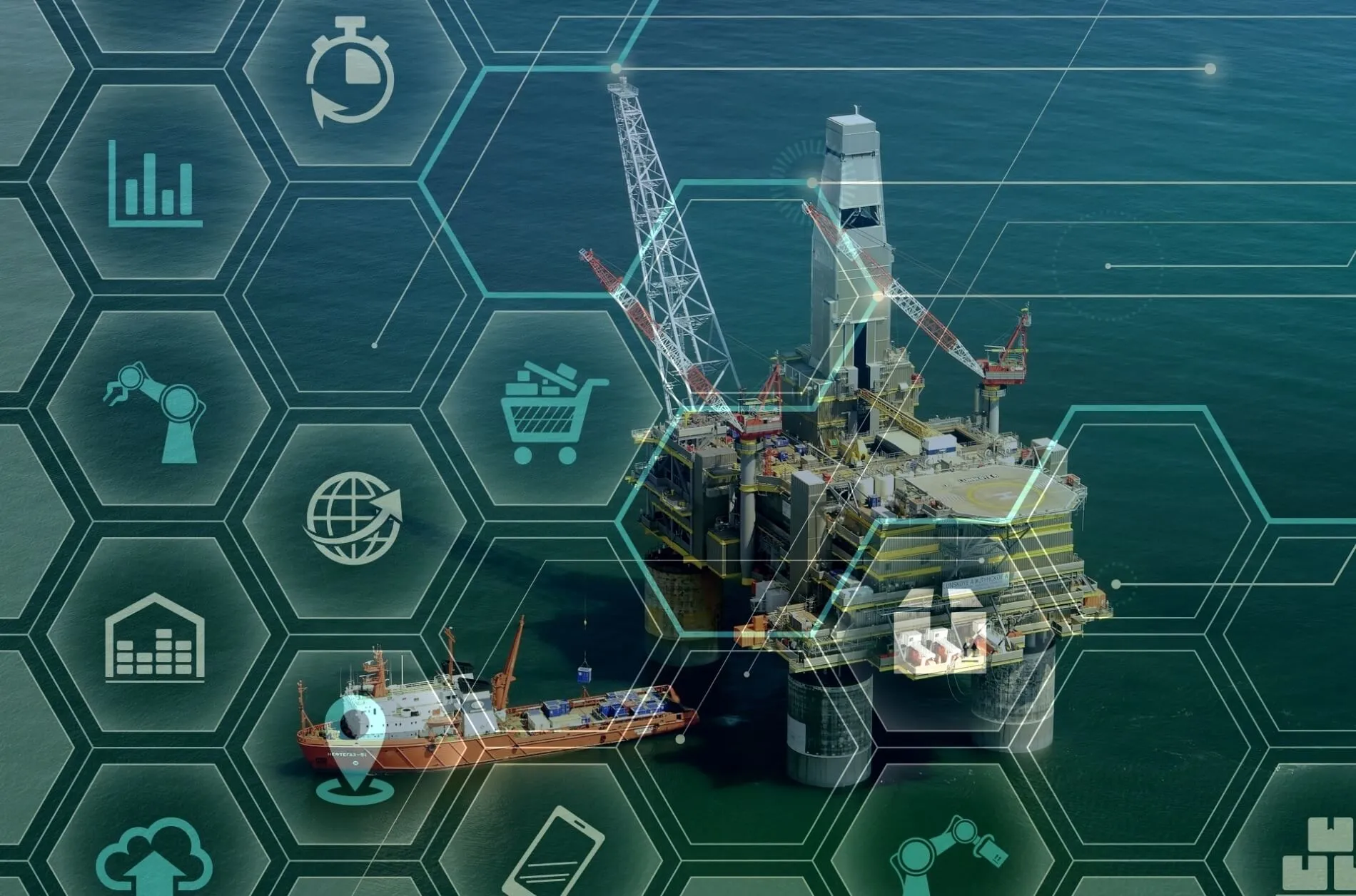
Deep Learning For Oil and Gas Applications
Learning Objectives Deep Learning is a part of Machine Learning used to solve complex problems and build intelligent solutions. The core concept of Deep Learning has been derived from the structure and function of the human brain. Deep Learning uses artificial neural networks to analyze data and make predictions. This course will be taught from scratch and plan is to cover most of the applications in Oil & Gas industry. Oil and gas industries are facing several challenges and issues in data processing and handling. Large amount of data bank is generated with various techniques and processes. The proper technical analysis of this database is to be carried out to improve performance of oil and gas industries. The main objective of this course is to make students comfortable with tools and techniques required in handling large amounts of datasets. They will also uncover various deep learning methods in NLP, Neural Networks etc. Several libraries and datasets publicly available will be used to illustrate the application of these algorithms. This will help students and professionals in developing skills required to gain experience of doing independent research and study. Prerequisites We will teach from scratch so no as such prerequisites are required. Topics to be covered · Introduction to Neural Networks and deep Neural Networks · Introduction to Tensor flow and Keras · Convolutional Neural Networks · Recurrent Neural Network · Transfer Learning · [Case Study] Production Performance Forecasting with Deep · Neural Networks · [Case Study] Drilling Optimisation with deep learning · [Case Study] Core image classification FAQs What will be the medium of language for the internship? English Will a certificate be provided? Certificates will be provided at the end of the training. Why we should join? · We will cover Neural Networks and deep Neural Networks. · Introduction to Tensor flow and Keras · Convolutional Neural Networks and Recurrent Neural Network · Also cover case study on Production performance Forecasting with · Deep Neural Networks · Presentation, recording of sessions, manuals will be provided. · Certificate of Completion

Oil and Gas Software Development Using Python
INTRODUCTION The Course will teach you the core concepts of Python and how to apply them to real-world problems in Oil & Gas. The course will begin with an introduction to Python and programming basics, followed by an in-depth look at lists, dictionaries, and control flow statements. You will also learn how to use the NumPy and Pandas libraries for data manipulation and analysis, and Matplotlib for data visualization. The second part of the course will focus on applying Python to Engineering problems. You will learn how to create material balance and inflow performance relationship (IPR) curves using Python, which are essential for understanding reservoir engineering and estimating oil and gas reserves and production rates. The final part of the course will focus on deployment. You will learn how to deploy a Python web application that demonstrates your ability to create a user-friendly interface for accessing Oil and Gas data. This will give you a practical understanding of how to create and deploy applications using Python. LEARNING OBJECTIVE By the end of this course, you will have a solid foundation in Python and be able to apply your skills to real-world problems. You will also have the practical skills necessary to create and deploy a Python web application for accessing Oil and Gas data. Training Prerequisites This training is ideally designed for all Students & Professional, it is not a pre-requisite, and every attempt shall be made to include people from other educational backgrounds. FAQs What will be the medium of language for the training? English Will a certificate be provided? Ans. Yes Why we should join? This training will: - · Enhance job opportunities by aligning with industry demands. · Python's versatility, data analysis capabilities, and automation skills make professionals well-suited for roles in developing efficient solutions, meeting the growing demand for skilled individuals in this sector.
Spotfire Analytics for Oil & Gas
Course Objectives This course is designed to provide students as well as professionals with a comprehensive set of skills and knowledge in the domain of TIBCO Spotfire analytics applied to the oil and gas industry. Throughout the course, participants will learn how to efficiently prepare and wrangle data, including data cleaning, transformation, and handling of missing data and outliers. They will then progress to advanced field data analysis and visualization in Spotfire, mastering the creation of plots, charts, and tables while interpreting field data visualizations. Additionally, participants will gain expertise in production performance analysis, including geospatial data assessment, KPI analysis, and real-time production dashboard creation. The course also covers production trend analysis and forecasting with machine learning, allowing learners to delve into time series analysis, anomaly detection, and predictive maintenance for pump failure prevention. Finally, participants will explore drilling optimization with machine learning, encompassing exploratory data analysis, feature engineering, rate of penetration prediction, and model evaluation, preparing them to tackle real-world challenges in the oil and gas sector. Learning Objectives · Develop data preparation and wrangling skills in TIBCO Spotfire. · Master data analysis and visualization techniques for field data. · Gain proficiency in production performance analysis and dashboard creation. · Learn production trend analysis and forecasting with machine learning. · Understand drilling optimization using exploratory data analysis and machine learning. Prerequisites · Basic understanding of data concepts. · A strong interest in data analysis and visualization. · Computer literacy and familiarity with data analysis software (basic proficiency is a plus). · These prerequisites are designed to ensure that new learners can effectively engage with the course content and build a solid foundation in TIBCO Spotfire analytics for the oil and gas industry. Topics to be covered · Data Visualization and Analysis · Field Data Analysis, Visualisation and Interpretation in Spotfire · Production Performance Analysis with Spotfire · Production Trend Analysis and Forecasting with Machine Learning in Spotfire · Drilling Optimization with Machine Learning in Spotfire · Reservoir Performance Monitoring with Spotfire FAQs 1. When is the course commencing? Ans: Expected date - Coming Soon 2. What are the course fees? Ans: Fees - 150 USD (Limited Offer for first 10 Participants 3. What will be the medium of language for the training? Ans: English 4. Will a certificate be provided? Ans: Yes 5. What if I missed any live sessions? Ans: We will be providing the recordings of the whole live sessions of the training along with materials for lifelong. 6. Why we should join? Ans: Joining TIBCO Spotfire training presents a unique opportunity to acquire in-demand skills that are highly sought after in the job market. It opens doors to a wide range of career opportunities, from data analysis and visualization to business intelligence and data science. As you master Spotfire, you'll not only gain proficiency in the tool but also sharpen your ability to make data-driven decisions, a skill that's invaluable in various industries. With Spotfire expertise, you'll enjoy a competitive edge in today's data-centric world, making you a valuable asset to potential employers and broadening your career horizons
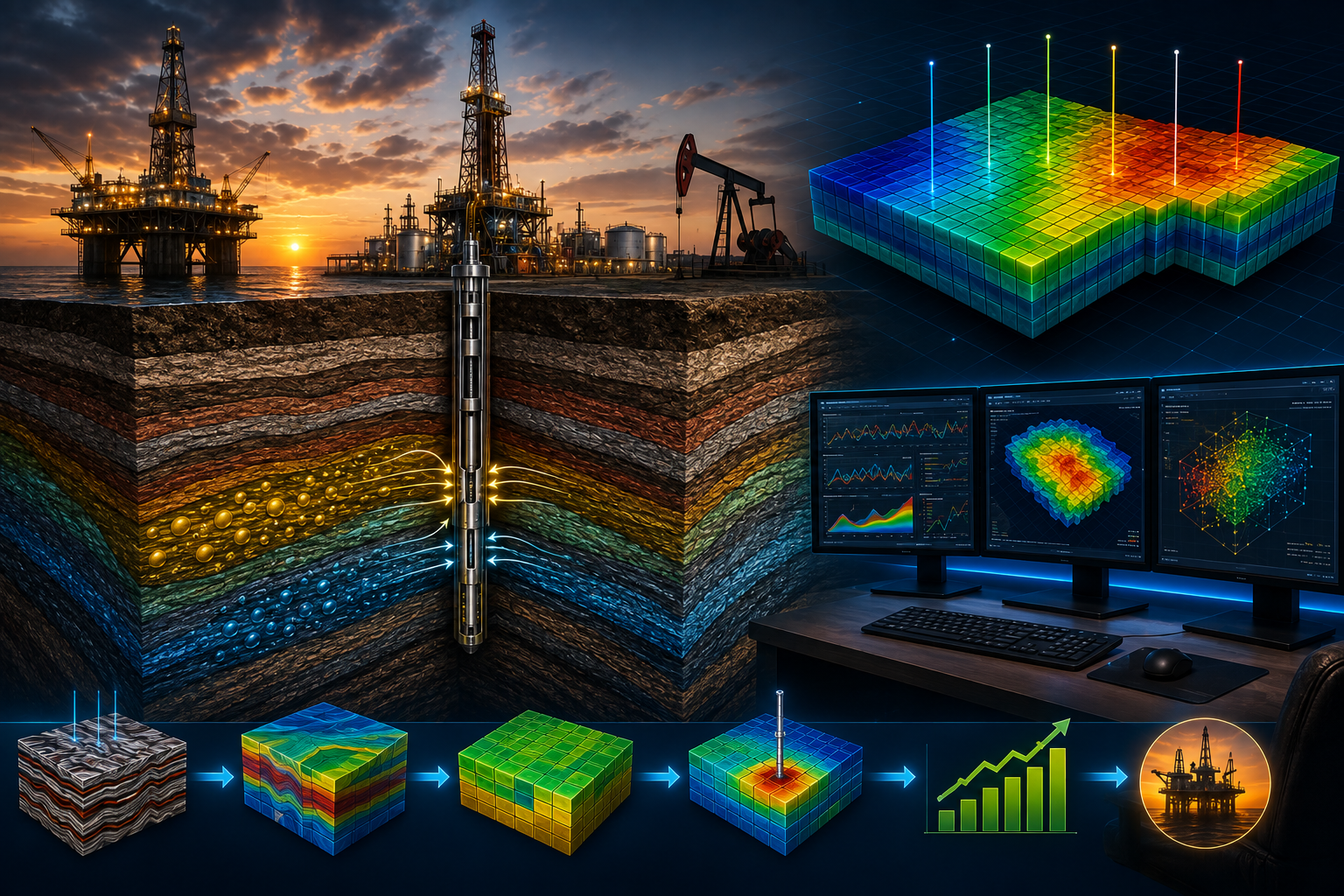
Mastering Reservoir Engineering from Basics to Software-Driven Solutions
Learning Objectives: This course aims to equip participants with a solid understanding of reservoir engineering, starting from the geological framework to advanced modeling techniques. Learners will explore reservoir fluid behaviour, petrophysical interpretations, and drive mechanisms. They will also engage in practical applications such as core analysis, material balance, and secondary recovery methods. By the end of the course, participants will be able to apply both classical and advanced techniques in reservoir simulations. Prerequisites: A basic understanding of geology and fluid mechanics is recommended for new learners. Professionals with experience in reservoir behaviour and oil and gas operations will benefit more from the advanced aspects. No specific software knowledge is required, as it will be covered during the course. Benefits of Learning (in terms of career) Enhanced Career Opportunities: Mastering reservoir engineering concepts and techniques can open doors to advanced roles in the oil and gas industry, such as reservoir engineer, geoscientist, or production specialist. Competitive Edge: Gaining expertise in advanced modeling, material balance, and enhanced oil recovery will make you a highly sought-after professional in exploration and production sectors. Professional Growth: This course equips you with the skills to tackle complex reservoir challenges, positioning you for leadership roles in projects involving simulation studies and reservoir management. Versatility in Job Roles: By learning a wide range of practical applications, from coring to fluid analysis, you can diversify into different areas of reservoir evaluation, boosting your job versatility and long-term career prospects. Frequently Asked Questions Will study materials be provided? Yes, all relevant study materials, including lecture slides and reference articles, will be provided. Is prior experience in reservoir engineering necessary to take this course? Not necessarily. While some familiarity will be helpful, the course is structured to accommodate both beginners and professionals. Are there any hands-on exercises in the course? Yes, participants will engage in practical exercises, particularly in core analysis and reservoir simulations. Will there be any assessments or certifications? Yes, assessments will be conducted periodically, and participants who complete the course successfully will receive a certificate.
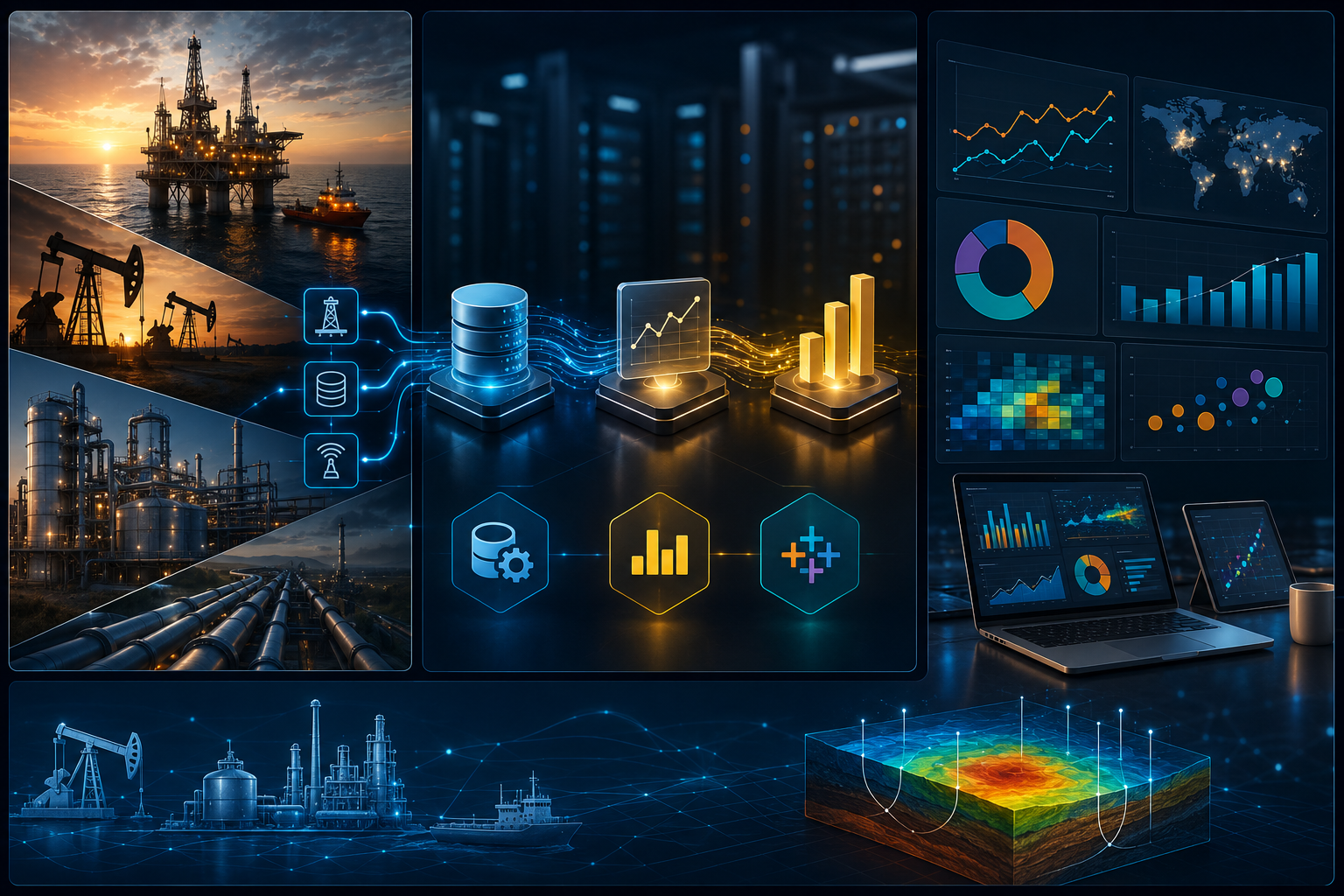
Integrated Insights: SQL, power BI and Tableau for Oil & Gas analytics
Course Overview: Embark on a transforming journey with our Oil & Gas Analytics course, which covers vital topics that combine theoretical expertise with practical applications. Learn the essentials of SQL designed specifically for the industry, from syntax to advanced queries and use Power BI to explore data dynamically, visualise it, and conduct in-depth multi-well analyses. Explore drilling data with Tableau while learning dimensional modelling and various visualisations. Improve your geospatial analysis skills by using Tableau to visualise well and location performance. This course is ideal for experts and new learners looking for a comprehensive skill set in oil and gas analytics. It combines practical methodologies with industry-relevant applications to provide unrivalled competency. Prerequisites Prerequisites for new learners include a strong interest in oil and gas operations, a willingness to master SQL foundations, and a desire to experiment with data analysis tools such as Microsoft Power BI and Tableau. No prior expertise is required, making this course suitable for beginners with an interest in the sector and a desire to explore into data analytics. LEARNING OBJECTIVES · Learn SQL Basics for Oil & Gas: Introduction to SQL and its specific application in the Oil & Gas industry. · Effective Querying Techniques: Master SQL syntax and structure for optimal data retrieval and f iltering. · Can able to do Advanced Data Manipulation in Oilfields: Utilize aggregate functions (SUM, AVG, COUNT, MAX, MIN) and window functions for analytical queries. Handle null values, duplicates, and execute case statements in oilfield data. · Power BI Proficiency: Connect Power BI to SQL databases for dynamic data exploration. Implement Power Query for data preparation, transformation, and dynamic filtering. Calculate key metrics with DAX for insightful analysis. · Make Production Dashboards in Power BI: Design real-time production dashboards, integrating Python and Al tools for advanced analytics. · Tableau for Drilling Data Visualization: Connect Tableau to SQL databases, navigate data preparation, and employ dimensional modeling. Visualize real-time drilling data using various chart types. · Geospatial Analysis with Tableau: Leverage Tableau for oilfield geospatial analysis, utilizing maps and filled maps for loca-tion-specific insights. Topics to be covered: 1. Introduction to SQL 2. Oilfield Data Wrangling, Aggregation and Operations in SQL 3. Data Exploration, Transformation, and Analysis with Power BI 4. Production Dashboards, Reporting, and Further insights 5. Drilling Data Exploration and Visualization with Tableau 6. Oilfield Geospatial Analysis and Field Performance Reports with Tableau. FAQS Who is this training program designed for? This program is designed for new learners include a keen interest in Oil & Gas operations, a willingness to learn SQL basics, and an eagerness to explore data analysis tools like Microsoft Power BI and Tableau Is prior experience in SQL or Power Bl required? No, the program caters to participants of all levels, including beginners. Basic familiarity with SQL concepts can be beneficial but is not mandatory. How will this training benefit my career in the Oil & Gas sector? This training will elevate your career in the Oil & Gas sector by honing advanced analytical skills, industry-specific knowledge, and proficiency in data analysis tools, empowering you to contribute to operational efficiency, adapt to industry trends, and enhance your employability for career advancement. What sets this training apart for Oil & Gas professionals? This program is tailored to address the specific needs of the Oil & Gas sector, offering industry-specific applications of Sql and Power bi in reservoir management, production analysis, reserve evaluation, and more. Can the skills learned be immediately applied in my work/projects? Yes, the training emphasizes practical applications. Participants will gain skills that can be directly applied to real-world Oil & Gas projects, enhancing productivity and efficiency. Is certification provided upon completion? Yes, participants will receive a certification upon successful completion of the training program. What's the fee for the program? 200 USD or 15,000 INR (Special Discount for first 10 Participants) Will I get a certificate? Yes, you will receive a 4-week training certificate upon completion of the programme. What if I miss classes? We will provide you the recorded lectures as well as the relevant materials.
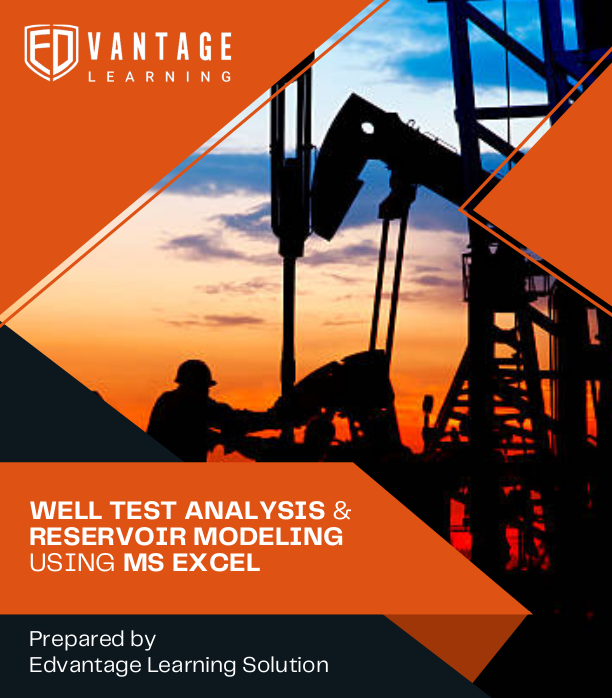
Well Test Analysis & Reservoir Modeling Using MS Excel
Course Description: The course a designed to introduce students and professionals to the core concepts of reservoir engineering, with a specific focus on interpreting and analysing reservoir data with a strong emphasis on well test interpretation using Microsoft Excel. Through real-world examples and hands-on exercises, learners will develop the ability to apply engineering principles to real-world reservoir challenges and make data-driven decisions in reservoir management. Learning Objectives: By the end of this course, participants will be able to: 1. Understand and apply classical reservoir engineering principles to analyse reservoir behaviour. 2. Use Microsoft Excel to process and interpret PVT dala 3. Perform material balance calculations and reservoir performance analysis. 4. Interpret well test data, such as pressure transient analysis, using Excel, 5. Analyse production and injection data to assess reservoir performance. 6. Understand decline curve analysis to generate forecasts and predictions for future reservoir behaviour using Excel-based tools. 7. Develop a strong understanding of reservoir characterization, and emphasis on reservoir surveillance operations. Course Duration: 10+ Hours Benefits of Learning (Career Growth) Enhanced Technical Skills - Leam how to analyze reservoir and well performance using Excel, a crucial skill for petroleum engineers, reservoir engineers, and production engineers. Better Job Prospects - Gaining expertise in well test analysis and reservoir modeling improves employability in oil & gas companies and consulting firms. Improved Decision-Making - Understanding production trends and reservoir behavior helps in making data-driven operational decisions. Stronger Analytical Capabilities- Hands-on Excel modeling skills allow for efficient reservoir evaluation and production optimization. Career Advancement- The ability to apply real-world petroleum engineering techniques can open doors to promotions and leadership roles. FAQs 1. Who should attend this course? Petroleum engineers, reservoir engineers, production engineers, students, and professionals seeking to improve their well fest analysis and reservoir modeling skills. 2. What is the duration of the training? The course duration is 10+ hours, spread across five live sessions. 3. Do I need prior knowledge of MS Excel? Basic famillarity with Excel is recommended but not mandatory, The training includes step-by-step guidance. 4. Will I receive a certificate? Yes, all participants will receive a certificate upon successful completion. 5. Is the training live or recorded? This is a live interactive training session with real-time problem-solving. 6. What if I miss a session? Recorded sessions will be provided to registered participants. 7. What is the price of the course? The actual price is $130 USD or ₹10,000 INR, but an offer price of $100 USD or 8,000 INR is available for the first 5 participants. 8. Can I ask questions during the sessions? Absolutely! The sessions are interactive, and participants can ask questions anytime. 9. How do I register? Contact via email or WhatsApp to secure your spot (details will be shared separately).
Master Oil & Gas Production Optimization with AI and ML
Course Objective This course aims to equip participants with the knowledge and skills to leverage Machine Learning techniques for production forecasting and optimization in the Oil & Gas industry. The program will provide hands-on experience in time series forecasting, well performance optimization, and advanced anomaly detection using statistical and deep learning methods. Learning Objectives ➢ Understand the fundamentals of machine learning and its applications in Oil & Gas production forecasting. ➢ Analyse and visualize time series data using statistical and signal processing techniques. ➢ Build and evaluate statistical models such as ARIMA and deep learning models like LSTMs for production forecasting. ➢ Apply machine learning algorithms for production optimization, including gas lift and choke optimization. ➢ Identify and mitigate anomalies using advanced ML-based techniques. Prerequisites: ✓ Will teach from scratch, so no perquisites as such required ✓ Having knowledge of data visualization, graphs and charts will be add on advantage. Topics to be covered: Module 1: Introduction to Machine Learning and Time Series Data Module 2: Mathematics & Statistics for Time Series Forecasting Module 3: Time Series Visualization and Signal Analysis Module 4: Statistical Models and Machine Learning Techniques Module 5: Production Optimization with Machine Learning Module 6: Advanced Techniques and Case Studies Benefits of Joining This Program ✓ Gain hands-on experience in machine learning applications tailored for the Oil & Gas industry. ✓ Enhance career prospects in data science, digital transformation, and production optimization roles. ✓ Learn to apply advanced statistical and deep learning techniques to solve real-world problems. ✓ Work on capstone projects to build a professional portfolio. ✓ Access course materials and recorded sessions for continuous learning and skill enhancement FAQs Who should enroll in this course? Engineers, data analysts, and professionals in the Oil & Gas industry looking to enhance their skills in production forecasting and machine learning. Do I need prior programming knowledge? Basic knowledge of Python and data analysis is recommended but not mandatory. What tools will be used in the course? The course will use Python, Jupyter Notebooks, and libraries like Pandas. Will I receive a certificate upon completion? Yes, participants will receive a certificate of completion from Edvantage Learning Solutions. Is there any project work involved? Yes, participants will work on a capstone project involving real-world production forecasting scenarios. Are there any prerequisites? A basic understanding of Oil & Gas processes and statistical concepts is beneficial. Can I access the course materials after completion? Yes, participants will have access to course materials and recorded sessions.

Diploma for Machine Learning in Oil & Gas
About the Training The training objective of a Diploma in Machine Learning for Oil & Gas is to equip students with the necessary knowledge and skills to apply machine learning techniques specifically in the context of the oil and gas industry. The program aims to provide a solid foundation in both machine learning concepts and their practical applications within the oil and gas sector. Course Objectives · Understanding the fundamentals of machine learning: Students will learn the basic principles,algorithms, and techniques of machine learning, including supervised and unsupervised learning, regression, classification, clustering, and dimensionality reduction. · Knowledge of oil and gas industry domain: The program will provide students with an understanding of the specific challenges, opportunities, and data characteristics relevant to the oil and gas industry. This includes exploring various data types such as seismic data, well logs, production data, and reservoir data. · Data preprocessing and feature engineering: Students will learn how to preprocess, clean, and transform oil and gas data for use in machine learning models. They will gain expertise in feature engineering techniques to extract meaningful features from raw data. · Model selection and evaluation: The program will cover different machine learning algorithms and techniques suitable for oil and gas applications. Students will learn how to select appropriate models, optimize hyperparameters, and evaluate model performance using relevant metrics. · Predictive modelling and anomaly detection: Students will be trained to build predictive models to forecast production, optimize drilling operations, detect anomalies, and identify potential risks in the oil and gas industry using machine learning techniques. · Data visualization and interpretation: The program will emphasize data visualization techniques to effectively communicate insights and patterns extracted from machine learning models. Students will learn to interpret and present results to domain experts and stakeholders. · Ethical considerations and industry best practices: The diploma program will address ethical considerations and challenges related to using machine learning in the oil and gas industry. It will also cover industry best practices for data handling, model deployment, and ongoing model monitoring and maintenance. SKILLS & BENEFITS YOU WILL ACQUIRE · High Demand and Career Opportunities · Solving Complex Problems · Automation and Efficiency · Data-Driven Decision Making · Personalization and Customer Experience · Improved Efficiency in the Oil & Gas Industry · Innovation and Research WHO CAN JOIN THE COURSE · Machine learning in the oil and gas industry can be learned by various professionals who work in or are interested in the field. · Oil and gas professionals & students who wants to start their career in Machine Learning. FAQS There are lot of diploma program on Machine Learning why to join your program There are lot of platforms who teach Machine Learning but we are the only institute who provide certified application-based data science training in Oil & Gas. I don't have prior coding? So can I join this program? No worries we will start it from scratch. You don't need any prior experience Will it be helpful for me if I Join this program as I have good knowledge of Python? Well good this can help you to understand the Machine Learning concepts behind oil and gas application easily. What's the fee for the program? INR 22500 or 300 dollars Will I get a certificate? Yes, you will get 14 Weeks of certificate from Persian Gulf University after the completion of the program. What if I miss classes? No worries we'll provide you recorded video along with necessary material. Will there be an assignment? Yes, we'll have assignment on weekly basis and final project at end of the program. Who can join this course? Undergraduate/Graduate or professional working in energy sector.
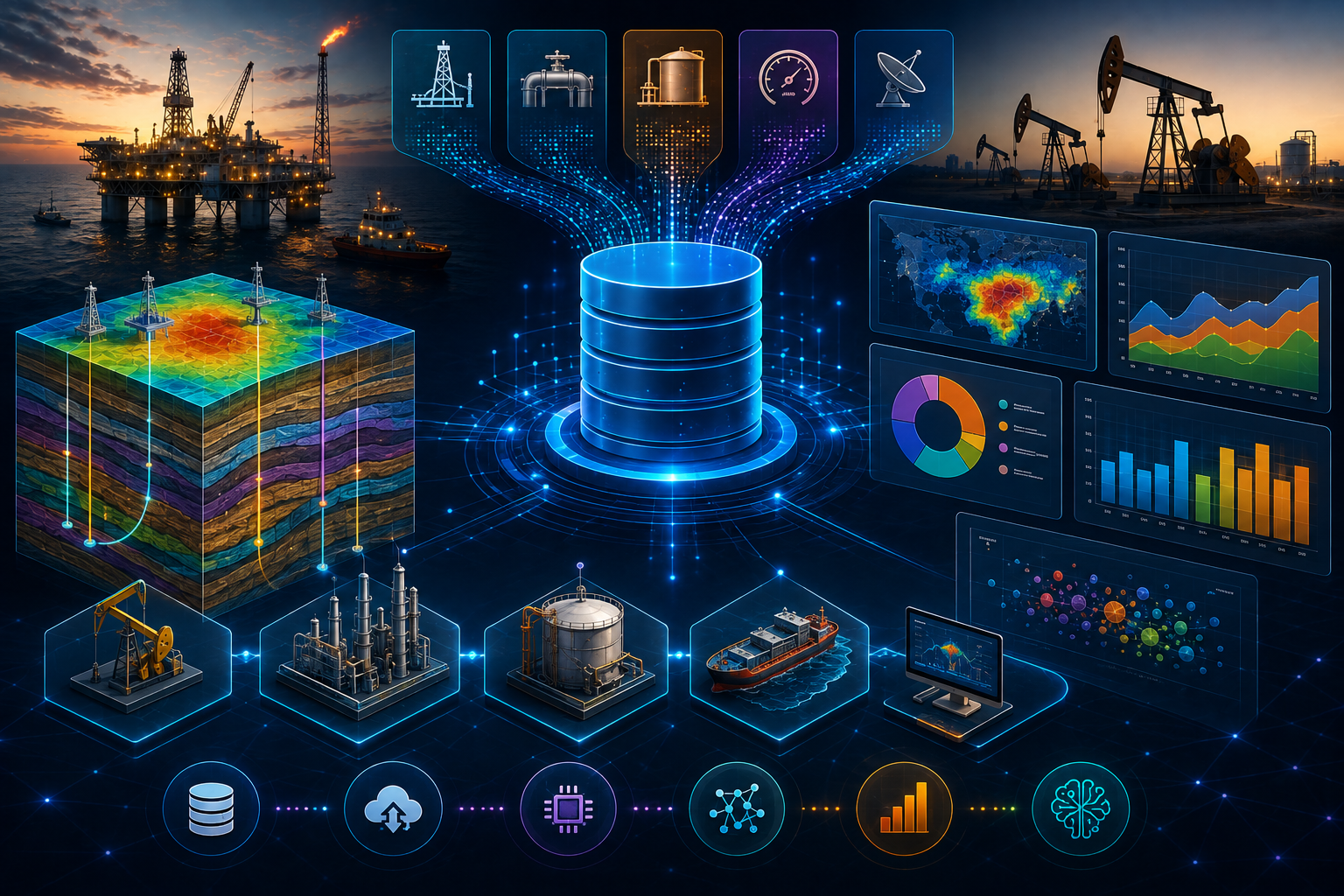
Diploma in Integrated Oil & Gas Analytics Using Big Data: A full well Lifecycle Approach
Course Objective: This course equips professionals with practical knowledge of applying data science to real-world challenges in the oil and gas industry, from upstream, midstream and downstream sectors. Through hands-on experience with big data, participants will explore advanced analytics and forecasting methods tailored to industry-specific scenarios. Why Join This Program? • Specialized Diploma Certification: Earn a diploma recognized by a leading university to strengthen your career in energy analytics. • Comprehensive Curriculum: Covers upstream, midstream, downstream, and market analytics with practical big data applications. • Flexible Learning Modules: Convenient 8-week program tailored for working professionals with weekend-only classes. • Lifetime Access: Revisit detailed course materials and recordings anytime for continuous learning. • Placement Assistance: Receive career guidance and job placement support in global energy firms. • One-on-One Mentorship: Get personalized guidance from experienced industry faculty. • Capstone Project: Apply your knowledge to solve real-world challenges using industry-relevant datasets Prerequisites: · Basic understanding of data science concepts and statistical methods. · Familiarity with programming languages like Python is recommended. · Knowledge of oil and gas industry fundamentals will be advantageous. Detailed Course Agenda Module 1: Introduction to Data Science in Oil and Gas Module 2: Upstream Analytics Module 3: Midstream Analytics Module 4: Market Analytics Module 5: Capstone Project Module 6: Advanced Topics and Trends FAQs 1. Who is this program for? Professionals in oil and gas, data science enthusiasts, and engineers looking to specialize in energy analytics. 2. What are the prerequisites? Basic Python and data science knowledge; familiarity with oil and gas concepts is beneficial but not mandatory. 3. What tools will be taught? Python libraries for analytics, time-series forecasting, ML, and DL techniques. 4. Is placement assistance available? Yes, the program includes dedicated career guidance and job placement support. 5. How is the course delivered? Live online sessions with interactive discussions and practical demonstrations. 7. What certificate will I receive? A recognized diploma from Lincoln Professional University upon course completion. 8. Can I access the content after the program? Yes, you’ll have lifetime access to all course materials and recordings.
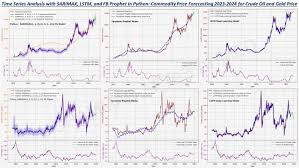
Oil & Gas Forecasting & Predictions using time series analysis
Course Objectives: Facing the dilemma between resource shortage and environment destruction, numerous researches have been initiated within the field of Oil & Gas study. The analysis of Oil & Gas scenarios for future energy systems requires appropriate historical data. However, while more or less detailed data on energy production is often available, appropriate data on energy consumption is often scarce. Time series analysis in the oil and gas sector involves systematically recording data points at regular intervals over a specified timeframe. This structured approach enables analysts to uncover trends, patterns, and variations in critical parameters, such as production volumes and exploration results. By studying the temporal evolution of key variables, professionals can make informed decisions, predict future trends, and optimize operational strategies for greater Oil & Gas efficiency and profitability. Learning Objectives: · Creates the opportunity to clean your data · Time Series Forecasting Can Predict the Future · Time series analysis helps you identify platforms · You can make the future performance of Oil estimations · Helps you to detect anomalies in your problems Prerequisites: · Will teach from scratch, so no prerequisites as such are required · Having knowledge of data visualization, graphs, and charts will be an added advantage. Topics to Be covered: Introduction to time series data, and how it is different from normal data. We are already doing forecasting in our real life. Mathematics and Statistics relevant to forecasting · Lag features · Algebra, Calculus · Outlier Removal Terminology of Time Series · Ts objects, Time plots & Seasonality · Periodicity & Trend · White Noise · Unit root & Smoothening Introductory signal analysis · Fourier Transforms: Taking time series · data into frequency domain · Recursion Plots · Which spike is and anomaly Getting Deeper into time series · Differencing · ACF and PACF · Hypothetical tests · Time series Data Analysis Thinking of time series problem as a regression problem Statistical Models § Auto Regression § Moving Average § ARIMA Deep Learning for time series § RNN § LSTM Advanced (Optional) § Anomaly detection using Auto § Encoders & Isolation Forest Frequently Asked Questions (FAQs): Why to join this Course? ü Practical Oriented Knowledge ü Experienced Digital Experts ü Flexible Learning Model with recorded lectures ü Certificate of Completion ü Project of Completion What if I don't have any prior coding experience? Can I still join this course? ü Don't worry, we'll start from scratch. There is no requirement for prior experience. Will joining this program be beneficial to me because I am proficient in Python? ü This might help you readily comprehend the data science ideas underpinning oil and gas applications. ü You will receive many data sets for practice and analysis Will I get a certificate? Yes, you will receive a 5-week training certificate upon completion of the programme. Will there be an assignment? ü Yes, we'll have assignment on weekly basis and final project at end of the program. Who can join this course? ü Undergraduate/Graduate or professional working in energy sector.
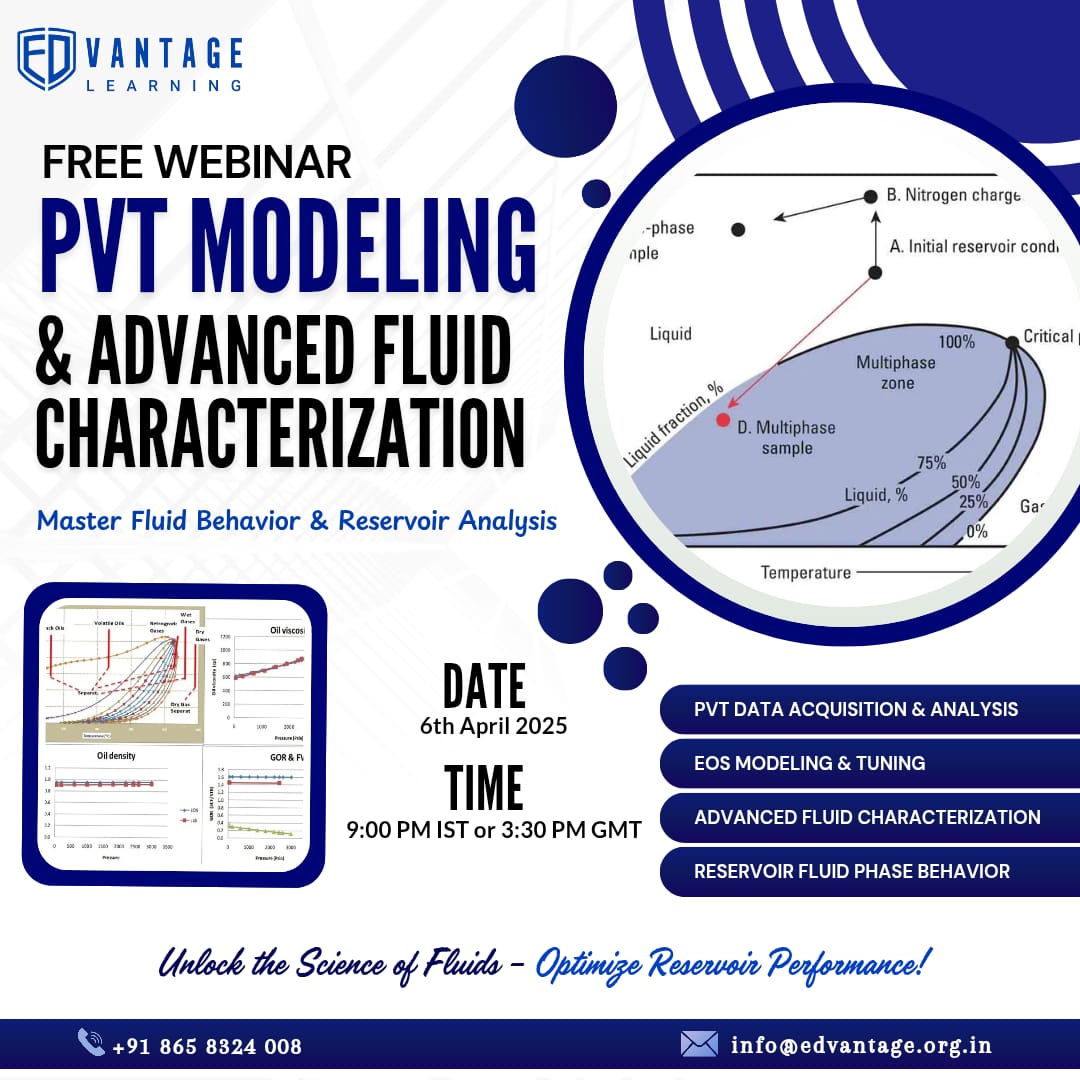
PVT Modeling & Advanced Fluid Characterization
Course Objectives: The PVT Modelling and Advanced Fluid Characterization course equips students with a deep understanding of reservoir fluid behavior through PVT analysis. Students will learn fluid characterization techniques, master Equation of State (EOS) modeling, and apply these concepts to reservoir engineering, production optimization, and enhanced oil recovery (EOR). By working on hands-on case studies and industry-standard software, students will gain practical skills essential for accurate fluid modeling and optimizing hydrocarbon recovery Learning Objectives: Understand the fundamentals of PVT (Pressure-Volume-Temperature) behavior and its significance in reservoir engineering Learn the methods to characterize reservoir fluids and conduct various PVT experiments Gain proficiency in fluid modeling techniques, including the use of Equation of State (EOS) models. Apply PVT analysis in reservoir engineering, production optimization, and enhanced oil recovery (EOR). Develop practical skills through case studies and hands-on experience with PVT modeling software. Agendas: ü Module I: Introduction to PVT and Fluid Properties Basics of PVT Analysis ü Module 2: Equation of State (EOS) Modelling ü Module 3: Application of PVT Models in Reservoir Engineering ü Module 4: PVT Modelling Applications in Production Practices ü Module 5: Practical Fluid Modelling and Case Studies FAQs What is PVT modeling and why is it important in reservoir engineering? PVT modeling involves analyzing the behavior of reservoir fluids under different pressure, volume, and temperature conditions. It is crucial for reservoir simulation, production forecasting, and optimizing recovery methods. What types of PVT experiments are covered in this course? The course covers various laboratory PVT tests, including Differential Liberation, Constant Composition Expansion, and Separator Tests, focusing on data acquisition and quality control. Do I need prior knowledge of fluid dynamics to take this course? Basic understanding of fluid properties and reservoir engineering concepts is recommended, but the course is designed to provide foundational knowledge of PVT modeling What is the duration of the course? The course consists of 12 hours of training, divided into six sessions of 2 hours each. Can this course help me in reservoir simulation and reserves estimation? Absolutely. The course covers how to use PVT properties in material balance calculations, reserves estimation, and reservoir simulation models like black oil and compositional models. What are the career benefits of completing this course? The course equips you with the skills necessary to work in reservoir engineering, production optimization, and EOR, enhancing your expertise in fluid modeling, which is highly sought after in the oil and gas industry.

Data Analytics & Visualization using Power BI for Oil & Gas
Course Objectives This course aims to equip participants with the skills to effectively use Power BI for comprehensive data analysis and visualization. Attendees will learn to connect to various data sources, transform and clean data, and create interactive reports and dashboards. The course will cover fundamental concepts of Power BI, including data modeling, DAX functions, and real-time analytics. By the end of the training, participants will be able to derive actionable insights from complex datasets of oil & gas and communicate findings through engaging visualizations. Who can join the course: Students and graduates from the Energy industry looking to start their career as energy or Oil & Gas Analysts. interested to become an excellent analyst for Business Development and track industry growth. Etc. Oil & Gas professionals who like to learn new skillsets and optimize their work efficiency. Prerequisites: Will teach from scratch, so no perquisites as such required. Having knowledge of data visualization, graphs, and charts will be add on advantage. Basic knowledge of the oil and gas industry is beneficial. Benefits of Power BI for the Oil & Gas industry: · Enhanced Analytical Skills: Proficiency in Power BI boosts your ability to analyse complex datasets, a valuable skill in various roles such as data analyst or business intelligence specialist. · Career Advancement: Expertise in Power BI can lead to new career opportunities and promotions, particularly in data-driven and analytical roles. · Increased Marketability: Knowledge of Power BI makes you a more attractive candidate in the job market, as many oil and gas companies seek professionals skilled in data visualisation and analysis. · Improved Decision-Making: Using Power BI enables you to make more informed decisions, showcasing your ability to drive strategic insights and operational improvements. · Professional Development: Mastering Power BI enhances your technical skillset, contributing to ongoing professional growth and keeping you up-to-date with industry trends. · Cross-Industry Versatility: Power BI skills are transferable across industries, providing flexibility to shift into different sectors or roles within the broader energy and technology fields. FAQs How can Power BI enhance my career in the Oil & Gas industry? Proficiency in Power BI can enhance your analytical skills. increase your marketability and open up new career opportunities. What will be the medium of language for the training? English Will a certificate be provided? Yes, we will provide a completion certificate after training What if I missed any live sessions? Ans. We will be providing the recordings of the whole live sessions of the training along with study materials for lifelong access.

Diploma in Petroleum Project Management & Field Development Economics
Course Objective: This diploma course in collaboration with Lincoln Professorial Academy empowers students with comprehensive knowledge and hands-on experience in managing petroleum projects, emphasizing effective project planning, economic evaluation, and risk management strategies tailored to the oil and gas industry. Through real-world case studies and practical activities, participants develop essential skills to manage complex petroleum projects from conception to completion, preparing them to excel in high-demand roles within the industry. Benefits of joining our Diploma program: · Acquire high-demand project management skills specific to oil and gas. · Industry-recognized certification to enhance your resume. · Comprehensive understanding of petroleum project lifecycle and economics. · Real-world training through hands-on projects and simulations. · Specialized risk management and safety expertise. · Master advanced tools like MS Project and Primavera. · Network with industry professionals for future opportunities. · Prepare for lucrative roles in project management and field economics. Learning Outcomes: ü Mariagerment Skills: Develop comprehensive project management capabilities tailored to the petroleum industry. covering the entire project lifecycle and field development. ü Evaluate Projects Using Economic and Financial Metrics: Gain the skills to assess project profitability and feasibility with confidence using tools like NPV, IRR, and cash flow analysis. ü Implement Risk Management and Strategic Planning: Understand and apply risk assessment and mitigation strategies to optimize project success ü Excel in Team Leadership and Stakeholder Engagement: Hone leadership, communication, and team management skills, equippirng you to lead multidisciplinary teams effectively. ü Use Advanced Project Tools and Software: Gain proficiency in tools like MS Project and Primavera, enhancing your ability to manage project timelines. Prerequisites: For Freshers: Basic knowledge of the oil and gas industry or a strong interest in learning about petroleum project management. For Professionals: Industry experience or a foundational understanding of project management principles. Agendas: Module 1: Introduction to Project Management in the Petroleum Industry Module 2: Petroleum Industry Operations & Project Lifecycle Module 3: Field Development Planning (FDP) Module 4: Project Planning and Scheduling Module 5: Petroleum Economics and Financial Modeling Module 6: Risk Management in Petroleum Projects Module 7: Cost Estimation and Budgeting Module 8: Procurement and Contract Management Module 9: Health, Safety, and Environment (HSE) in Project Management Module 10: Leadership and Team Management Module 11: Project Execution and Monitoring Module 12: Project Closeout and Lessons Learned Final Assessment Ø Final Project Presentation: Students present their project plan, including planning, risk management, field development, and cost estimation for a petroleum project. Ø Course Completion and Feedback Session Key Benefits Career-Ready Expertise Hands-On Learning for Real-World Impact Certification for Career Advancement Expanding Industry Network Comprehensive Knowledge of the Project Lifecycle Frequently Asked Questions (FAQs) Who is this diploma course for? It’s ideal for professionals in the oil and gas sector or fresh graduates aiming to pursue project management roles. What are the prerequisites for joining? Basic understanding of the oil and gas industry; freshers with an interest in petroleum project management are welcome. What career paths can this course open for me? Roles in project management, field development planning, and petroleum economics across the oil and gas sector. Are there any hands-on activities? Yes, each module includes case studies, practical exercises, and project simulations. What is the final assessment? Students will present a complete petroleum project plan covering all essential project management phases. What project management tools will I learn? MS Project, Primavera, and industry-standard tools for scheduling, budgeting, and project monitoring. Can I pursue this diploma part-time? Yes, the course is structured to accommodate part-time learners. Is there a certification upon completion? Yes, a recognized diploma certificate from Lincoln Professional Academy in Petroleum Project Management will be awarded. How will this course benefit me as a fresher? It builds foundational skills in project management, making you job-ready for entry-level roles in petroleum project management.
Diploma in Well Engineering & Completion Engineering
Diploma Objective: This 3-month Well Engineering & Completion Engineering Diploma affiliated by Persian Gulf University is meticulously tailored for both recent graduates and experienced professionals aiming to carve out successful careers in the dynamic field of drilling & Completion. This intensive three-month program is strategically crafted to provide a holistic learning experience, seamlessly integrating practical applications with indispensable software knowledge. This comprehensive program ensures that participants not only grasp theoretical concepts but also gain hands-on experience, preparing them for the dynamic challenges of the industry. Diploma Prerequisites: Open Doors to a World of Opportunity - No Matter Your Background! There are no as such prerequisites for the program. The program starts from scratch and progresses to advanced concepts. This inclusive approach ensures that the program is accessible to anyone, be it a recent graduate or a seasoned working professional. Join us, regardless of your background, and embark on a transformative journey where we guide you through the essentials and complexities of well engineering and completion, empowering you to thrive in the program and succeed in the field. Learning Objectives: Upon completion of this program, participants will emerge with a well-rounded skill set, equipped to handle the complexities and challenges of well engineering and completion, from technical intricacies to project management proficiency. · Fundamental Understanding of drilling & completion: Develop a comprehensive understanding of the fundamental principles and concepts in drilling and completion engineering, serving as the basis for advanced knowledge acquisition. · Safety Protocols in Well Engineering: Acquire a thorough knowledge of safety protocols and best practices specific to well engineering, ensuring a secure working environment for all operational aspects. · Fundamental Understanding of drilling & completion: Develop a comprehensive understanding of the fundamental principles and concepts in drilling and completion engineering, serving as the basis for advanced knowledge acquisition. · Well Engineering Design: Master the skills to formulate effective well engineering designs, taking into account geological, geophysical, and reservoir parameters to optimize drilling and completion processes · Fundamental Understanding of drilling & completion: Develop a comprehensive understanding of the fundamental principles and concepts in drilling and completion engineering, serving as the basis for advanced knowledge acquisition. · Casing and Cementing Design: Explore advanced techniques in casing and cementing design, ensuring mastery in achieving structural integrity, wellbore isolation, and reservoir protection. · Well Trajectory and Directional Drilling: Gain proficiency in well trajectory and directional drilling, mastering the ability to control wellbore paths for enhanced reservoir access and production optimization. · Extended Reach Drilling (ERD) and High-Pressure High-Temperature (HPHT) Operations: Develop specialized knowledge in extended reach drilling techniques, allowing for exploration and exploitation of reservoirs over extended distances. Understand the unique challenges and considerations in High-Pressure High-Temperature drilling scenarios. · Drilling and Completion Challenges: Identify, analyse, and devise solutions for various challenges encountered in drilling and completion operations. This includes addressing bore hole problems, mitigating stuck pipe incidents, and understanding weil costing intricacies. · Project Management: Acquire skills in project management related to drilling and completion operations, encompassing effective planning, resource allocation, and timely execution to ensure successful project outcomes Topics to be Covered: 1. Basic Drilling Concepts 2. Rig Equipment, Safety & Designing 3. Geomechanics for Drilling & Completion 4. Drill String & BHA Design 5. Casing Designing 6. Cementing Designing 7. Mud Engineering 8. Drilling Hydraulics 9. Hole Problems (Stuck Pipe, lost Circulation) 10. Well Control 11. Directional Drilling Operations and Tools 12. Offshore Drilling 13. Extended Reach Drilling 14. High Pressure & High Temperature Wells 15. Well Completion Benefits of Joining: · Edvantage Learning: Your Gateway to Career Excellence · Diploma Certification: Obtain diploma certificate in Well Engineering & Completion From Persian Gulf University · Quality Education: Experience high-quality education that ensures a valuable learn-ing journey. · Expert Faculty: Learn from our dedicated team of highly qualified and experienced instructors, providing mentorship in your chosen field. · Flexible Learning Options: We understand the need for flexibility in your busy life. Access education through online classes, evening courses, and part-time programs that suit your schedule. · Proven Track Record: Our graduates consistently achieve their career aspirations and make substantial industry contributions, reflecting the effectiveness of an Edvantage Learning education. · Industry-Relevant Curriculum: Our programs are designed in collaboration with industry experts, ensuring you gain the skills and knowledge necessary to excel FAQS What will be the medium of language for the training? English Will a certificate be provided? Yes What if I missed any live sessions? We will be providing the recordings of the whole live sessions of the training along with materials for lifelong. Why we should join? Joining a diploma in well engineering offers a unique opportunity to acquire in-depth expertise in a crucial sector of the oil and gas industry. With the ever-growing demand for energy resources, this program not only opens doors to promising career prospects but also allows you to contribute to the safe and efficient production of vital resources, making it a rewarding choice for your professional development.
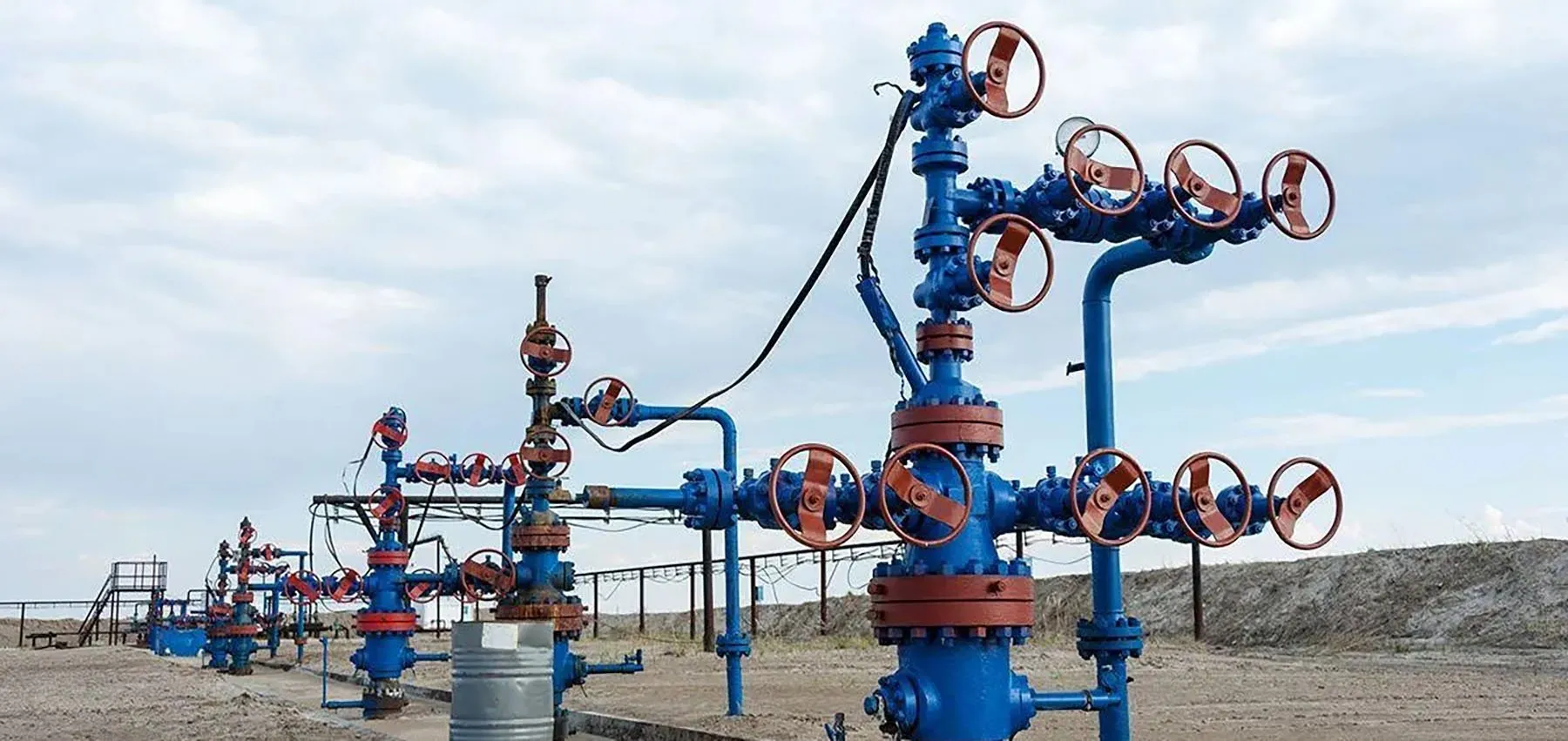
Electric Submersible Pump (ESP) Fundamental
Learning Objectives · Understand the fundamental principles and components of ESP systems. · Identify best practices for installation, operation, and maintenance of ESP equipment. · for implementing strategies, troubleshooting common issues and optimising ESP performance · Apply advanced techniques to enhance production rates and mitigate operational challenges. Prerequisites No technical knowledge or prior experience in the oil & gas industry is required for participation in this training. Whether you're a fresher or a seasoned professional, we'll start from the basics and guide you through every aspect of the Electric Submersible Pump (ESP) system. All you need is a willingness to learn and actively engage in the training sessions Topics to be covered 1. Fundamentals and Applications of ESP 2. Evolving ESP Pump Technology 3. Components & Equipment used with ESP 4. ESP System Performance Calculations and Equipment Sizing 5. ESP Monitoring, Control & Protection, Installation 6. Commissioning, Operation & Maintenance FAQs 1. Who can participate in the ESP virtual training? Our training program is open to everyone, regardless of their level of experience or background in the oil and gas industry. Whether you're a fresher or a seasoned professional, you're welcome to join us 2. Do I need prior technical knowledge of ESP systems? No prior technical knowledge is required. We will start from scratch and provide comprehensive guidance on all aspects of Electric Submersible Pump (ESP) systems. 3. How will the training be conducted? The training will be conducted virtually through presentations, case studies, and discussions. Participants will have the opportunity to engage with instructors and fellow participants in a collaborative learning environment 4. What are the benefits of attending the ESP virtual training? By attending the training, you'll gain valuable knowledge and practical skills in ESP technology, which can enhance your career prospects in the oil and gas industry. You'll also have the opportunity to network with industry professionals and expand your professional network. 5. Is there any certification provided upon completion of the training? Ves, participants who complete the training program will receive a certificate of completion, which can serve as a testament to their proficiency in ESP systems

Machine Learning & Python Applications for Petrophysics
Course Overview The "Machine Learning & Python using Petrophysics" course provides a comprehensive exploration of petrophysical data analysis and machine learning applications within the domain of reservoir characterization. Participants will learn to process well log data, implement supervised and unsupervised machine learning models, and utilize advanced techniques for data quality control. Through hands-on case studies, learners will gain practical experience in predicting reservoir properties, classifying lithofacies, and clustering reservoir data. This course is designed to bridge the gap between petrophysics and modern data science methodologies. Learning Objectives · Analyse and preprocess petrophysical data using Python libraries such as Lasio and Welly. · Develop machine learning models for predicting reservoir properties, including permeability and water saturation. · Classify lithofacies and identify flow zones using support vector machines and random forests. · Apply clustering techniques to characterize reservoir heterogeneity and interpret complex petrophysical data. Why Learn with Edvantage Learning? · Career Advancement: Gain in-demand skills that enhance your capability to work on interdisciplinary projects combining geosciences and data science. · Industry-Relevant Knowledge: Stay ahead in the energy sector with training that integrates real-world data and case studies. · Expert Instructors: Learn from experienced professionals who bring practical insights and cutting-edge techniques to the classroom. · Networking Opportunities: Connect with peers and industry leaders, opening doors to career opportunities and professional growth. Prerequisites: For new learners, a basic understanding of Python programming and fundamental concepts in geology or petrophysics is recommended. For professionals, experience in petrophysics or reservoir engineering, along with basic programming skills, will help in leveraging the full potential of the course. Topics to be covered: 1. Petrophysical Data Analysis with Python 2. Machine Learning Prediction of Reservoir Properties from Well Log Data 3. Lithofacies Classification with Machine Learning 4. Machine learning Assisted Techniques for Log Data Quality Control 5. Reservoir Characterization with Clustering FAQs: 1. What is the "Machine Learning & Python using Petrophysics" course about? The course teaches participants to use Python for petrophysical data analysis and apply machine learning techniques to reservoir characterization, It includes data preprocessing, supervised and unsupervised learning, and practical case studies. 2. Who should take this course? Ideal for geoscientists, reservoir engineers, data scientists, and professionals in the energy sector, as well as new learners with a basic understanding of Python and geology. 3. What will I learn from this course? Load and preprocess well log data Implement machine learning models to predict reservoir properties Classify lithofacies and identify flow zones Apply clustering techniques to analyse reservoir heterogeneity Handle data quality issues and impute missing data 4. How is the course structured? The course is divided into five sections: Petrophysical Data Analysis with Python Machine Learning Prediction of Reservoir Properties Lithofacies Classification with Machine Learning Machine Learning Assisted Techniques for Log Data Quality Control Reservoir Characterization with Clustering Each section includes hands-on case studies. 5. How can this course impact my career? Mastering the integration of petrophysics and machine learning equips you with cutting-edge skills highly valued in the industry, leading to better job prospects, higher earning potential, and the ability to work on innovative projects.

Mastering Machine Learning for Enhanced Production and Reservoir Forecasting Analytics
Course Description: This intensive course is designed to equip participants with the knowledge and skills necessary to leverage machine learning techniques for enhanced production and reservoir forecasting analytics in the oil and gas industry. Through a combination of theoretical lectures, hands-on exercises, and real-world case studies, participants will gain a comprehensive understanding of reservoir analysis and forecasting, along with practical experience in implementing machine learning algorithms to address complex challenges in the field. Prerequisites: This course is suitable for both freshers and professionals in the oil and gas industry. Prerequisites include a basic understanding of Petroleum engineering concepts and familiarity with programming fundamentals in Python. Benefits of Learning: Upon completion of this course, participants will: ➢ Comprehensive Understanding: Gain insight into reservoir analysis and forecasting's critical role in the oil and gas sector, fostering informed decision-making. ➢ Machine Learning Competence: Develop fundamental machine learning skills, enabling you to apply advanced analytics techniques effectively. ➢ Data Preparation Proficiency: Acquire skills in data collection, preprocessing, and feature engineering tailored for reservoir data, ensuring high-quality input for analysis. ➢ Predictive Modeling Expertise: Learn to select, train, and evaluate machine learning models for accurate reservoir forecasting, facilitating proactive decision-making. ➢ Hands-on Implementation: Gain practical experience in implementing machine learning algorithms using Python libraries, enhancing your coding and analytical capabilities. Production Forecasting and Analytics, and ML Applications for PCP, SRP, ESP 1. Introduction 2. Production Systems Fundamentals 3. Data Collection and Preprocessing 4. Feature Engineering 5. Machine Learning Models for Production Forecasting 6. Model Evaluation and Performance Metrics 7. Time Series Forecasting Techniques 8. ML Applications for PCP, SRP, and ESP Reservoir Analytics 1. Introduction to Reservoir Analytics 2. Fundamentals of Reservoir Engineering 3. Reservoir Data Collection and Preprocessing 4. Feature Engineering for Reservoir Data 5. Machine Learning Models for Reservoir Analysis 6. Model Evaluation and Performance Metrics 7. Advanced Topics in Reservoir Analytics 8. Real-world Applications and Case Studies Q. What study materials will be provided during the training? Participants will receive comprehensive study materials, including presentations, handouts, and recommended readings, to supplement their learning experience. Q. Will certificates be awarded upon completion of the training? Yes, participants who successfully complete the program requirements will receive a certificate of completion, acknowledging their participation and achievement. Q. Is prior experience in the oil & gas industry required to join the training? No prior experience is required. The program is designed to accommodate participants with varying levels of knowledge and experience.

Petro Python - Mastering Core Concepts & Real World Applications
Course Description Petro-Python is a comprehensive course designed for Petroleum Engineers who want to learn how to use Python to solve problems in the Oil and Gas industry. The course will teach you the core concepts of Python and how to apply them to real-world problems in Petroleum Engineering. The course will begin with an introduction to Python and programming basics, followed by an in-depth look at lists, dictionaries, and control flow statements. You will also learn how to use the NumPy and Pandas libraries for data manipulation and analysis, and Matplotlib for data visualization. The second part of the course will focus on applying Python to Petroleum Engineering problems. You will learn how to create material balance and inflow performance relationship (IPR) curves using Python, which are essential for understanding reservoir engineering and estimating oil and gas reserves and production rates. The final part of the course will focus on deployment. You will learn how to deploy a Python web application that demonstrates your ability to create a user-friendly interface for accessing Oil and Gas data. This will give you a practical understanding of how to create and deploy applications using Python. Learning Objectives By the end of this course, you will have a solid foundation in Python and be able to apply your skills to real-world problems in Petroleum Engineering. You will also have the practical skills necessary to create and deploy a Python web application for accessing Oil and Gas data. Prerequisites This training is ideally designed for all Students & Professional, it is not a pre-requisite, and every attempt shall be made to include people from other educational backgrounds. Target Audience This course is designed for Petroleum Engineers/geology background who want to learn Python and apply it to their work. It is also suitable for anyone who wants to learn Python and its applications in the Oil and Gas industry. No prior programming experience is required, but a basic understanding of Petroleum Engineering concepts is helpful. Course Benefits · Learn core Python concepts and how to apply them to real-world problems in Petroleum Engineering · Develop practical skills in data manipulation, analysis, and visualization using NumPy, Pandas, and Matplotlib · Learn how to deploy a Python web application for Oil and Gas data · Gain a deeper understanding of Material balance and Inflow performance relationship (IPR) curves. Resources · Live Sessions from experienced professionals · Recorded session · Digital manuals · Field case studies · E-Certificates · Career Assistance Course Outline · Introduction to Python and programming basics · Lists, dictionaries, and control flow statements · NumPy for numerical computing · Pandas for data manipulation and analysis · Matplotlib for data visualization · Material balance and Inflow performance relationship (IPR) curves · Deploying a Python web application for Oil and Gas data FAQS Why should I join your data science programme when there are so many others? There are other platforms that teach python, but we are the only institute that offers accredited application-based python training in the oil and gas industry. What if I don't have any prior coding experience? Can I still join this course? Don't worry, we'll start from scratch. There is no requirement for prior experience. Will joining this program be beneficial to me because I am proficient in Python? This might help you readily comprehend the ideas underpinning oil and gas applications. You will receive many data sets for practise and analysis. Will I get a certificate? Yes, you will receive a training certificate upon completion of the programme. Will there be an assignment? Yes, we'll have assignment on weekly basis and final project at end of the program. What standards are referred to in this course? This course is made according to industry best practice. Who can join this course? Undergraduate/Graduate or professional working in energy sector.
Petroleum Field Development Planning from Concept to Execution
Course Objective: This course aims to equip aspiring and practicing petroleum professionals with a comprehensive understanding of how field development plans (FDP) are conceptualized, structured, and executed. It bridges the gap between geoscience, engineering, and economic planning by offering a holistic, hands-on learning experience. Participants will gain insight into the multidisciplinary nature of FDPs and develop practical skills to contribute effectively to real-world field development teams. Learning Objectives: · By the end of this course, participants will be able to: · Understand the full lifecycle of petroleum field development from discovery to production. · Analyse seismic, geological, and reservoir data to support FDP decisions. · Estimate reserves using volumetric and decline curve methods. · Design development schemes, well plans, and surface facility layouts. · Build simple economic models to evaluate and compare development options. Course Modules: Module 1: Fundamentals of Field Development Planning Module 2: Subsurface Characterization & Reserves Estimation Module 3: Development Strategy, Well Planning & Drilling Module 4: Surface Facilities Planning & Economic Evaluation Module 5: FDP Integration, Case Study & Presentation FAQs: Who should attend this course? Engineers, geoscientists, and energy sector students seeking practical FDP skills and real-world understanding of oil field planning. What are the prerequisites? Basic knowledge of petroleum engineering or geoscience is helpful but not mandatory. What will I gain by completing this course? You’ll develop project-ready FDP skills, build an industry-aligned portfolio, and gain an edge for upstream job roles in E&P companies, consultancies, or regulatory bodies.
Production Forecasting & Well Performance Optimization with Python & Machine Learning
Course Objective This course aims to equip participants with the knowledge and skills to leverage Machine Learning techniques for production forecasting and optimization in the Oil & Gas industry. The program will provide hands-on experience in time series forecasting, well performance optimization, and advanced anomaly detection using statistical and deep learning methods. Learning Objectives Ø Understand the fundamentals of machine learning and its applications in Oil & Gas production forecasting. Ø Analyze and visualize time series data using statistical and signal processing techniques. Ø Build and evaluate statistical models such as ARIMA and deep learning models like LSTMs for production forecasting. Ø Apply machine learning algorithms for production optimization, including gas lift and choke optimization. Ø Identify and mitigate anomalies using advanced ML-based techniques. Prerequisites: ü Will teach from scratch, so no perquisites as such required ü Having knowledge of data visualization, graphs and charts will be add on advantage. Topics to be covered: · Module 1: Introduction to Machine Learning and Time Series Data · Module 2: Mathematics & Statistics for Time Series Forecasting · Module 3: Time Series Visualization and Signal Analysis · Module 4: Statistical Models and Machine Learning Techniques · Module 5: Production Optimization with Machine Learning · Module 6: Advanced Techniques and Case Studies Benefits of Joining This Program · Gain hands-on experience in machine learning applications tailored for the Oil & Gas industry. · Enhance career prospects in data science, digital transformation, and production optimization roles. · Learn to apply advanced statistical and deep learning techniques to solve real-world problems. · Work on capstone projects to build a professional portfolio. · Access course materials and recorded sessions for continuous learning and skill enhancement FAQs Who should enroll in this course? Engineers, data analysts, and professionals in the Oil & Gas industry looking to enhance their skills in production forecasting and machine learning. Do I need prior programming knowledge? Basic knowledge of Python and data analysis is recommended but not mandatory. What tools will be used in the course? The course will use Python, Jupyter Notebooks, and libraries like Pandas. Will I receive a certificate upon completion? Yes, participants will receive a certificate of completion from Edvantage Learning Solutions. Is there any project work involved? Yes, participants will work on a capstone project involving real-world production forecasting scenarios. Are there any prerequisites? A basic understanding of Oil & Gas processes and statistical concepts is beneficial.
Well Completion
LEARNING OBJECTIVES Well completion is the process that changes a drilled well into a delivering one. These steps include casing, perforating, gravel packing, and installing a production tree. The objective of this training is to provide participants with a comprehensive understanding of well completion process. It familiarizes with the main completion components for naturally flowing wells: reservoir-wellbore interface, the completion string and the production wellhead. It will enable attendees to know about the downhole and surface completion accessories needed to optimize production and for future well operations. Intelligent completions are also explained. PRE-REQUISITES Graduates or engineers with experience, engaged in drilling operations, production operations, workover, and completions; petroleum engineering in both the service and operating sectors. RESOURCES · Live lectures from experienced professionals · Recorded session · Digital manuals · Field case studies · Certificate of Completion TOPICS TO BE COVERED · Introductions Ø Fundamentals of Well completion Ø Procedure and Operations Ø Components · Introduction to Down Hole Equipment Ø Identify the functionality Ø Recognize the full suite of equipment · Wellhead and Christmas Tree Ø Difference between wellheads and Christmas trees Ø Describe the functions of a wellhead Ø Identifying the various annuli and various seals Ø Function of a Christmas tree Ø Identify the various valves and their functions · API Standards Ø Identifications Ø Differences between API connections and premium connections · Packers Ø Function of a packer Ø Packer setting methods Ø Mechanical components of packers Ø Method of categorizing packers Ø Main options for connecting the tubing to the packer · Tubing Ø Description and connection selection criteria Ø Physical basis for tubing length changes Ø Calculate a simple tubing length change Ø Characteristics of a tubing string, including weight/internal Ø Results from a torque/turn chart Ø Metallurgy, and associated properties · Safety Valves Ø Components of a landing nipple Ø Lock mandrel system Ø Function of a safety valve Ø A surface controlled and a subsurface controlled valve Ø Conditions where a safety valve should be placed · Accessories Ø Wireline re-entry guides Ø Blast joints Ø Flow couplings Ø Incorporating equipment · Well Data Ø Identify areas requiring review Ø Reservoir data Ø Fluid data Ø Results from a torque/turn chart FAQS Who is this course for? Graduates or engineers with experience, engaged in drilling operations, production operations, workover, and completions; petroleum engineering in both the service and operating sectors. Is previous experience required? You do not need prior knowledge or experience to complete this course and it is assumed that you are competent in your designated role How will this course benefit me? This course aims to provide an overview of coiled tubing equipment and its operation How will this course benefit my company? To ensure you have an overview of Completion equipment and its operation. What standards are referred to in this course? This course is made according to industry best practice Is there an assessment? Once you have completed the course, you will be asked a series of questions to check your knowledge and understanding
Advanced Python for Reservoir, Production and Petrophysics
About the Program Whether you're just beginning your journey in petroleum data analytics or already working in upstream domains-this course is designed to take you further. "Advanced Python for Reservoir, Production and Petrophysics" is a 16+ hours hands-on certification program that blends Python programming with real-world petroleum workflows-from production forecasting to reservoir simulation. Powered by Edvantage Learning Solutions, this course introduces participants to modern, open-source Python tools and machine learning techniques that are reshaping upstream oil & gas analytics. Each session is designed to bridge the gap between theoretical understanding and applied industry practices. Why Learn Python for Petroleum Engineering & Petrophysics? Traditional petroleum workflows often rely on manual interpretation and closed-form tools. But the energy sector is evolving. Python is now the industry's preferred language for: Ø Automating repetitive tasks Ø Analyzing large volumes of well, core, and reservoir data Ø Building machine learning models for predictions Ø Driving faster, more informed technical decisions Whether you're a student exploring data science or a professional upgrading your toolkit-Python enables you to stay relevant, efficient, and future-ready. Key Learning Objectives By the end of the course, learners will be able to: ü Handle and analyze multi well production data using Python ü Apply regression and machine learning techniques for DCA and production forecasting ü Process and visualize well log (LAS/DLIS) and CT scan data ü Build facies classification models from petrophysical logs ü Perform exploratory analysis on core datasets ü Predict absolute permeability using neural networks ü Use PYMRST for simulating reservoir behavior and optimizing well placement Agenda v Production data analytics and machine learning v Formation evaluation and machine learning v Absolute permeability prediction from core data using neural networks v Reservoir simulation and well placement optimization Who Should Attend? This course is ideal for: · Petroleum Engineers - seeking to upgrade to data-driven workflows · Petro physicists & Reservoir Engineers - exploring Al/ML in evaluation & modeling · Data Science Enthusiasts in Energy Sector - eager to apply Python in upstream domains · Final-Year Students & Researchers - working on petroleum data projects or thesis · Faculty Members & Trainers - integrating modern Python methods into academic modules No prior experience in Python is mandatory. Basic programming awareness will be helpful but not essential. Frequently Asked Questions (FAQs) 1. Do I need prior Python experience to attend? No. The course is beginner-friendly. Basic programming awareness is useful but not mandatory. All concepts are taught step-by-step 2. Will I receive a certificate after the course? Yes, all participants will receive a Certificate of Completion from Edvantage Learning Solutions after successful participation 3. Is the course practical or theory-based? The course is highly practical with real-world datasets, hands-on coding exercises, and mini-projects based on petroleum workflows. 4. What tools or software do I need? No installations are required. We use Google Colab, a browser-based Python notebook. You just need a laptop and internet access 5. What will I get after completing the course? You'll receive: · Certificate · Python scripts and Colab notebooks · Sample datasets · PDF notes and cheat sheets · Session recordings · Access to our leamer support forum 6. Will this course help me professionally? Absolutely. The skills taught are in demand across upstream domains, and useful for job roles, academic research, and technical interviews. 7. Are there any assignments or projects? Yes, each day includes guided mini-projects using real industry data to reinforce learning and build your portfolio
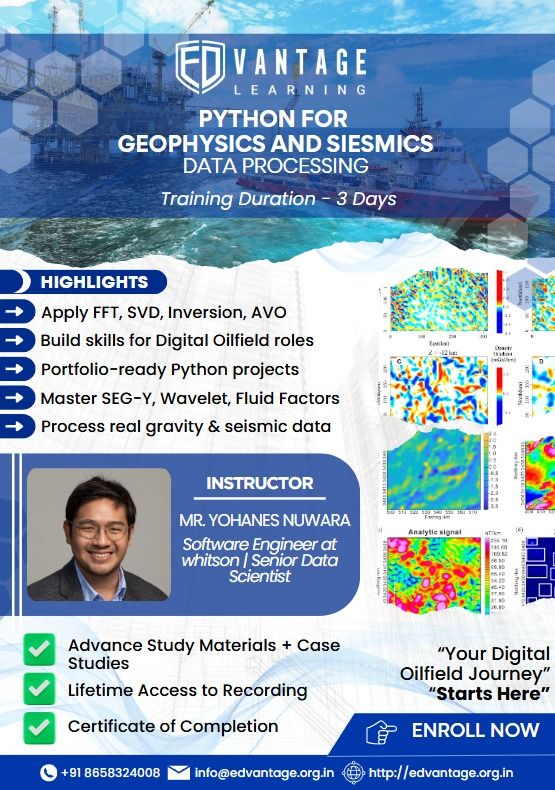
Python for Geophysics Data Processing
Course Introduction Turn Raw Subsurface Signals into Actionable Geoscience Insights with Python This 3-day hands-on course is designed for geophysicists, researchers, and earth scientists eager to apply Python programming in the real world of gravity and seismic data analysis. The curriculum blends core programming principles with advanced geophysical applications such as FFT, SVD, seismic wavelet analysis, inversion modeling, and more. Whether you're interpreting Bouguer anomalies or visualizing seismic traces, this training will walk you through each step using actual datasets and proven Python libraries. Course Outline: Introduction to Geophysical Data Processing · Basic concepts in programming: arrays, matrices, and data frame · Data visualization: Scientific plotting with Matplotlib & Mapping gravity data · Statistical analysis with Pandas and Seaborn using geophysical dataset · Numerical analysis: linear and polynomial regression, interpolation and extrapolation Gravity and seismic data analysis · Making sense of gravity data: Processing and analysis of Bouguer gravity anomaly data · Regional and residual anomaly separation from Complete Bouguer Anomaly (CBA) using ID Fast Fourier Transform (FFT) and 2D Second Vertical Derivative (SVD) · Making sense of seismic data: seismic data visualization with segyio, trace header analysis, mapping seismic surveys · Seismic frequency wavelet and deconvolution Seismic data interpretation and inverse modelling · Basics of inverse modelling in Python · Seismic multi attribute extraction and analysis · Seismic post-stack inversion and fluid factor analysis · Basic AVO modelling Learning Objectives - Career Impact Become Geoscience-Ready for the Digital Era Master Python programming tailored for real-world geophysical workflows a must-have skill in modern energy, oil & gas, and environmental sectors. Unlock High-Demand Roles in Data-Driven Exploration Equip yourself for emerging roles such as Geo-data Analyst, Exploration Data Scientist, and Seismic Workflow Automation Specialist. Bridge the Gap Between Interpretation and Intelligence Transform from traditional interpretation methods to code-based, automated analysis - giving you a competitive edge in any subsurface team. Build a Portfolio with Real Gravity & Seismic Projects Showcase hands-on experience with Bouguer anomaly processing, SEG-Y visualization, and inversion workflows in Python - attractive to recruiters and research institutions. Future-Proof Your Career in Energy Tech Whether you aim for R&D, digital oilfield, or consultancy, this course gives you the coding confidence and scientific edge to thrive in a fast-evolving geoscience landscape. Is This Course Right for You? This course is designed for geoscience professionals and aspiring analysts who want to modernize their workflow and get hands-on with Python-based geophysical processing. Ideal for: · Geophysicists, geologists, and exploration engineers · Research scholars and M.Sc./PhD students in earth sciences · Professionals working in oil & gas, mining, geotech, or CCS projects · Data scientists entering energy or geoscience sectors · Anyone seeking to bridge coding with real geophysical applications Frequently Asked Questions (FAQs): 1. Is this course beginner-friendly? Yes! No prior Python experience is required. We start from the basics. 2. Do I need to install any software? Just Python and Jupyter (Anaconda is preferred). A step-by-step setup guide will be shared. 3. Are sessions recorded? Yes, all live sessions will be recorded and provided for lifetime access. 4. Will real datasets be used? Absolutely. You'll work with Bouguer gravity anomalies and SEG-Y seismic files. 5. Can I reuse the material in my job or thesis? Yes. All code notebooks, datasets, and workflows are yours to reuse. 6. Is a certificate provided? Yes, you'll receive a verifiable Certificate of Completion after Day 3. 7. What industries is this relevant to? Oil & gas, mineral exploration, environmental geophysics, and energy research.
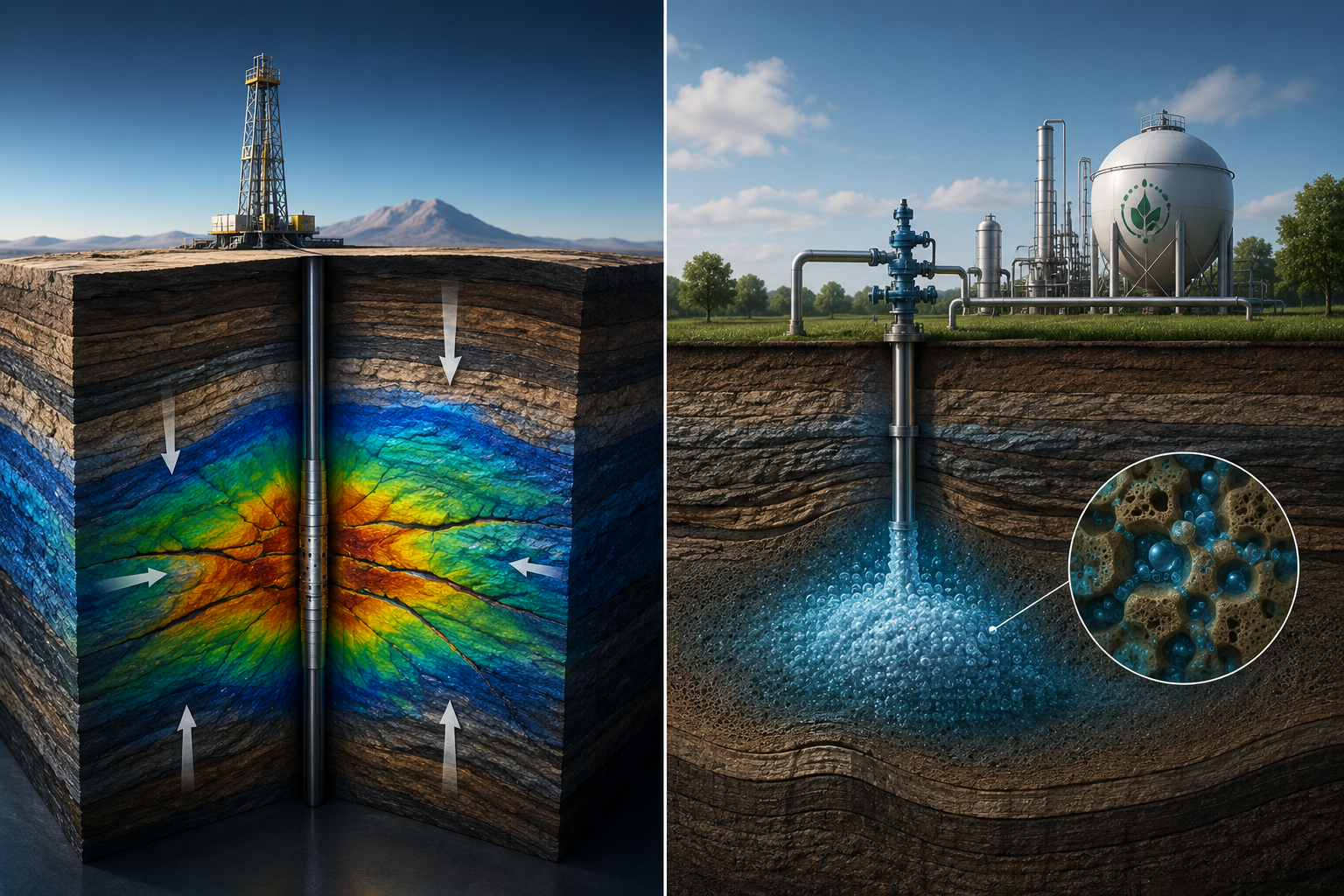
Petroleum Geomechanics & CCUS: From Subsurface Principles to Field-Scale Applications
Course Objective This course is designed to introduce participants to the foundational and advanced concepts of petroleum geomechanics, covering rock behavior, stress analysis, MEM development, and geomechanical applications in drilling, production, and CO₂ storage. It bridges theoretical geoscience with practical petroleum engineering insights. Participants will gain hands-on understanding of how subsurface mechanics influence exploration and field development. Learning Benefits for Your Career · Build a solid foundation in rock mechanics, stress regimes, and MEMS · Understand wellbore stability and how to prevent drilling failures · Learn to interpret wireline logs and core tests from a geomechanics lens · Gain exposure to 1D/2D/3D Mechanical Earth Model construction · Enhance your skillset for roles in CCUS and sustainable petroleum operations · Make your resume stand out with applied geomechanics certification Prerequisites No prior geomechanics experience is needed. Freshers with a background in petroleum, geology, or mechanical engineering will find it easy to follow, while industry professionals will benefit from enhanced MEM modeling and CCUS insights. Course Outline Introduction to Petroleum Geomechanics · What is Geomechanics? · Definition and scope within petroleum engineering. · Earth's Structure and Stress Regimes · Overview of lithosphere, crust, mantle, and their mechanical properties · Influence of fluid flow through porous media Geomechanical Processes in Hydrocarbon Exploration · Origin and development of pore pressure · Types of stress: lithostatic, hydrostatic, tectonic, pore pressure · Role of geomechanics in petroleum system analysis · Introduction to rock mechanics and fundamental rock properties · Important Properties: Stress, strain, Young's modulus, Poisson's ratio, shear strength Rock Properties and Measurement Techniques · Rock and Soil Mechanics Basics · Elasticity, plasticity, and failure criteria · Wireline logging (acoustic, density, neutron, resistivity) & Borehole imaging and formation evaluation · Core analysis and sample preparation · Laboratory Testing of Rock Properties: Uniaxial/triaxial compression tests 1D MEM Development · In-situ Stress Measurements · Mechanical Earth Models (MEM) · Building ID MEMs and applications in 2D & 3D MEMS · MEM construction from well log data · Applications in drilling, completion, and production Wellbore Stability and Sand Production · Mohr's Circle and stress path analysis · Fracture Mechanics · Wellbore Stability Principles · Causes of instability: collapse, fracturing, breakouts · Sand Production Mechanisms and Prediction Reservoir Geomechanics and Applications in CCUS · Geomechanical Modeling Techniques · Analytical vs. numerical modeling (Ex: FEM) · Input data requirements and model calibration · Geomechanical hazards: wellbore collapse, lost circulation, sand production, fracture reactivation · Carbon capture and storage (CCS) geomechanics Frequently Asked Questions (FAQs) Is the course beginner-friendly? Yes, the course is structured for both freshers and professionals. What kind of certificate will I receive? A graded Certificate of Completion issued by the training provider. Are there any live projects or case studies? Yes, we will cover industry case studies and perform a step-by-step MEM development. What are the software/tools taught or referenced? We cover well log analysis, stress plotting, and basic modelling techniques (Excel-based; FEM overview). Will this help in CCUS and unconventional fields? Absolutely. The last day covers geomechanics applications in CCUS and subsurface hazards. What are the key deliverables included in the fee? Course slides, MEM templates, recorded videos, practical datasets, and career guidance.
Machine Learning with Time Series Applications for Energy Industry
Course Benefits · Live lectures from experienced professionals · Recorded session · Digital manuals · Field case studies · E-Certificates after an assessment test Course Objectives Facing the dilemma between resource shortage and environment destruction, numerous researches have been initiated within the field of energy study. For example, confronted with the fast increase in energy demand caused by economy growth, energy security has become a quite important issue, and lots of researches tried to capture the main trend in energy development, involving the productions, consumptions and prices of various energy forms. The analysis of energy scenarios for future energy systems requires appropriate data. However, while more or less detailed data on energy production is often available, appropriate data on energy consumption is often scarce. Time series analysis is a specific way of analysing a sequence of data points collected over an interval of time. In time series analysis, analysts record data points at consistent intervals over a set period of time rather than just recording the data points intermittently or randomly. Learning Objectives ü Creates the Opportunity to Clean Your Data ü Time Series Forecasting Can Predict the Future ü Time Series Analysis Helps You Identify Patterns Prerequisites v Will teach from scratch, so no perquisites as such required. v Having knowledge of data visualization, graphs and charts will be add on advantage. Topics to be Covered w Introduction to time series data, and how it is different from normal data. We are already doing forecasting in our real life w Mathematics and Statistics relevant to forecasting a. Lag features b. Algebra, Calculus c. Outlier Removal · Terminology of time series a. Ts objects b. Time plots c. Seasonality d. Periodicity e. Trend f. White Noise g. Unit root h. Smoothening · Pandas with time series - datetime object · Introductory signal analysis a. Fourier Transforms: Taking time series data into frequency domain b. Recursion Plots c. Which spike is and anomaly · Getting Deeper into time series a. Differencing b. ACF and PACF c. Hypothetical tests d. Time series Data Analysis · Thinking of time series problem as a regression problem · Statistical Models a. Auto Regression b. Moving Average c. ARIMA · Deep Learning for time series a. RNN b. LSTM · Advanced (Optional) a. Anomaly detection using Auto Encoders b. Isolation Forest Frequently Asked Questions Why to join this Course? · Practical Oriented Knowledge · Experienced Digital Experts · Flexible Learning Model with recorded lectures · Certificate of Completion · Project of Completion What if I don't have any prior coding experience? Can I still join this course? · Don't worry, we'll start from scratch. There is no requirement for prior experience. · Will joining this program be beneficial to me because I am proficient in Python? · This might help you readily comprehend the data science ideas underpinning oil and gas applications. You will receive many data sets for practice and analysis. Will I get a certificate? Yes, you will receive a 6-week training certificate upon completion Acf the programme Will there be an assignment? Yes, we'll have assignment on weekly basis and final project at end of the program. Who can join this course? Undergraduate/Graduate or professional working in energy sector.

Diploma for HSE in Oil & Gas
Introduction Embark on a rewarding journey towards a successful career in the Oil & Gas industry with our fully certified Diploma in Health, Safety, and Environment (HSE) training program in collaboration with Lincoln Professional Academy This comprehensive training equips both students and professionals with the essential operational skills needed to thrive in this dynamic field. Our program covers a wide range of operational aspects, providing participants with practical knowledge and hands-on experience essential for navigating the complexities of the industry. From safety protocols to environmental regulations, we ensure that our students are well-prepared to meet the challenges of the Oil & Gas sector head-on. Join us and take the first step towards a fulfilling career in Oil & Gas. Enroll now and unlock a world of opportunities! Learning Objectives: 1. Understanding of Industry Standards: Gain comprehensive knowledge of the health, safety, and environmental standards and regulations specific to the Oil & Gas sector 2. Risk Management. Learn to identify, assess, and mitigate risks associated with various operations within the Oil & Gas industry, ensuring a safe working environment for all personnel. 3. Emergency Response Preparedness: Develop skills to effectively respond to emergencies such as oil spills, fires, and other incidents that may occur during field operations 4. Occupational Health: Acquire an understanding of occupational health hazards prevalent in the Oil & Gas industry and learn strategies to prevent and manage them effectively. 5. Safety Procedures Master the implementation of safety protocols and procedures, including personal protective equipment (PPE) usage. hazard communication, and safe work practices Environmental Protection: Explore methods for minimizing environmental. 6. Impact through proper waste management, pollution prevention, and sustainable practices in Oil & Gas operations 7. Incident investigation and Reporting. Learn the fundamentals of incident investigation techniques and reporting procedures to ensure continuous improvement in safety performance. 8. Environmental Protection: Explore methods for minimizing environmental impact through proper waste management, pollution prevention, and sustainable practices in Oil & Gas operations. 9. Equipment Operation and Maintenance. Familiarize yourself with the safe operation and maintenance of equipment commonly used in Oil & Gas exploration, drilling, production, and transportation. By completing our Diploma in HSE in Oil & Gas, you will be equipped with the essential knowledge and skills to excel in various roles within the industry while prioritizing the health, safety, and environmental sustainability of operations. Prerequisites: To participate in an HSE initiative in the Oil & Gas sector, individuals need a fundamental understanding of industry operations and risks. coupled with awareness of applicable HSE regulations. Additionally, a personal commitment to prioritizing safety and fostering a proactive safety culture within the workplace is crucial for successful engagement in HSE efforts Why to join? · Enhanced Career Prospects: Gain specialized skills and certifications highly sought after by employers in the Oil & Gas industry, opening up a wide range of career opportunities. · Competitive Edge: Stand out in the job market with a recognized diploma that demonstrates your commitment to health, safety, and environmental practices in the Oil & Gas sector. · Industry-Relevant Training: Receive practical, hands-on training designed in collaboration with industry experts, ensuring that you are equipped with the knowledge and skills needed to excel in the field · Networking Opportunities: Connect with industry professionals, instructors. and fellow students, expanding your professional network and gaining valuable insights into industry trends and best practices · Training flexibility: Recorded Sessions along with study materials will be shared after every class which is accessible for lifetime Learning Modules: Module1: Introduction to Oil & Gas Industry Module 2: Fundamentals of Health, Safety, and Environment Module 3: Oil & Gas Industry Processes and Hazards Module 4: Occupational Health and Industrial Hygiene Module 5: Safety Management Systems Module 6: Environmental Management in Oil & Gas Module 7: Emergency Response and Crisis Management Module 8: HSE Auditing and Inspections Module 9: Human Factors in HSE Module 10: International HSE Standards and Best Practices Module 11: Advanced Topics in HSE Module 12: Capstone Project and Practical Application Module 13: Technology in HSE Module 14: International Regulations and Compliance Module 15: Stakeholder Engagement and Communication Module 16: Legal Aspects of HSE Module 17: Sustainable Practices in Oil & Gas Module 18: Leadership and HSE Culture Module 19: Advanced Emergency Response Simulation Module 20: Professional Development and Networking FAQS 1. What does HSE stand for, and why is it important in the oil and gas sector? HSE stands for Health, Safety, and Environment, It's crucial in the oil and gas sector to ensure the well-being of employees and to minimize environmental impact, making it a cornerstone for sustainable operations and regulatory compliance 2. Will there be assessments or exams throughout the program? Yes, there will be assessments to evaluate your understanding of the material and track your progress throughout the program. 3. Is this training suitable for both students and experienced professionals in the oil and gas industry? Absolutely, whether you're new to the industry or have years of experience, this training program offers valuable insights and updates on HSE practices specific to the oil and gas sector. 4. What sets this training program apart from others in the field? Our program offers comprehensive coverage of HSE topics specific to the oil and gas industry. delivered by experienced professionals. With a focus on practical application and real-world scenarios, you'll gain skills immediately applicable in your career.
Diploma in ESG, Carbon Trading and Sustainable Finance
Diploma in ESG, Carbon Trading, and Sustainable Finance Course Overview: In collaboration with Lincoln Professional University, this diploma program offers a comprehensive understanding of Environmental, Social, and Governance (ESG) principles, carbon trading mechanisms, and sustainable finance strategies. It equips professionals with the knowledge and practical skills needed to address sustainability challenges in business and finance. Benefits of Learning: Career Advancement ü High-Demand Skillset: Develop expertise in ESG, carbon trading, and sustainable finance-rapidly growing fields driven by global sustainability mandates. ü Career Versatility: Access diverse roles such as ESG Analyst, Sustainability Consultant, Carbon Market Advisor, or Green Finance Strategist. ü Industry-Relevant Knowledge: Gain hands-on experience through real-world case studies and practical simulations, preparing you for roles in finance, consulting, corporate governance, and policymaking. ü Boost Employability: Enhance your profile in competitive job markets with an industry-recognized certification and a portfolio project that showcases your ESG competencies. ü Leadership in Sustainability: Become a sustainability leader in your organization by driving compliance, ethical investment, and climate strategy initiatives. Prerequisites This diploma program is designed for both professionals and new learners. While a basic understanding of finance, economics, or environmental science can be beneficial, it is not a prerequisite. The course is structured to support beginners with step-by-step guidance while also providing in-depth, industry-relevant content for working professionals seeking to upskill in ESG and sustainability domains. Course Contents § Module 1: Introduction to ESG & Sustainability § Module 2: Carbon Markets & Carbon Trading § Module 3: Sustainable Finance & Green Investment § Module 4: ESG Risk Management & Corporate Governance § Module 5: Capstone Project & Certification Who Should Enroll? • Finance professionals and investors • Sustainability managers and consultants • Corporate executives and policymakers • Students and researchers in ESG and finance Why join? • Hands-on training in ESG analytics and carbon trading • Exposure to real-world case studies and industry experts • Certification to enhance career prospects in sustainable finance FAQs Who is this course best suited for? Finance professionals, sustainability consultants, policy advisors, corporate executives, and students interested in ESG and green finance. Do I need prior ESG or finance knowledge to enrol? No. The course is beginner-friendly while also offering advanced applications for professionals seeking to deepen their expertise. What kind of certification will I receive? Upon successful completion of the course and capstone project, you’ll receive an industry-recognized diploma in collaboration with Lincoln Professional University. Will I work on real projects? Yes! You will complete a capstone project involving the development of a sustainability strategy and conducting an ESG and carbon footprint analysis. Is the course updated with the latest global regulations and practices? Yes. The curriculum includes up-to-date ESG frameworks such as GRI, TCFD, UN SDGs, and covers the latest trends in sustainable finance. What kind of support will I receive during the course? You will have access to dedicated case study reviews, and full support for your final capstone project.
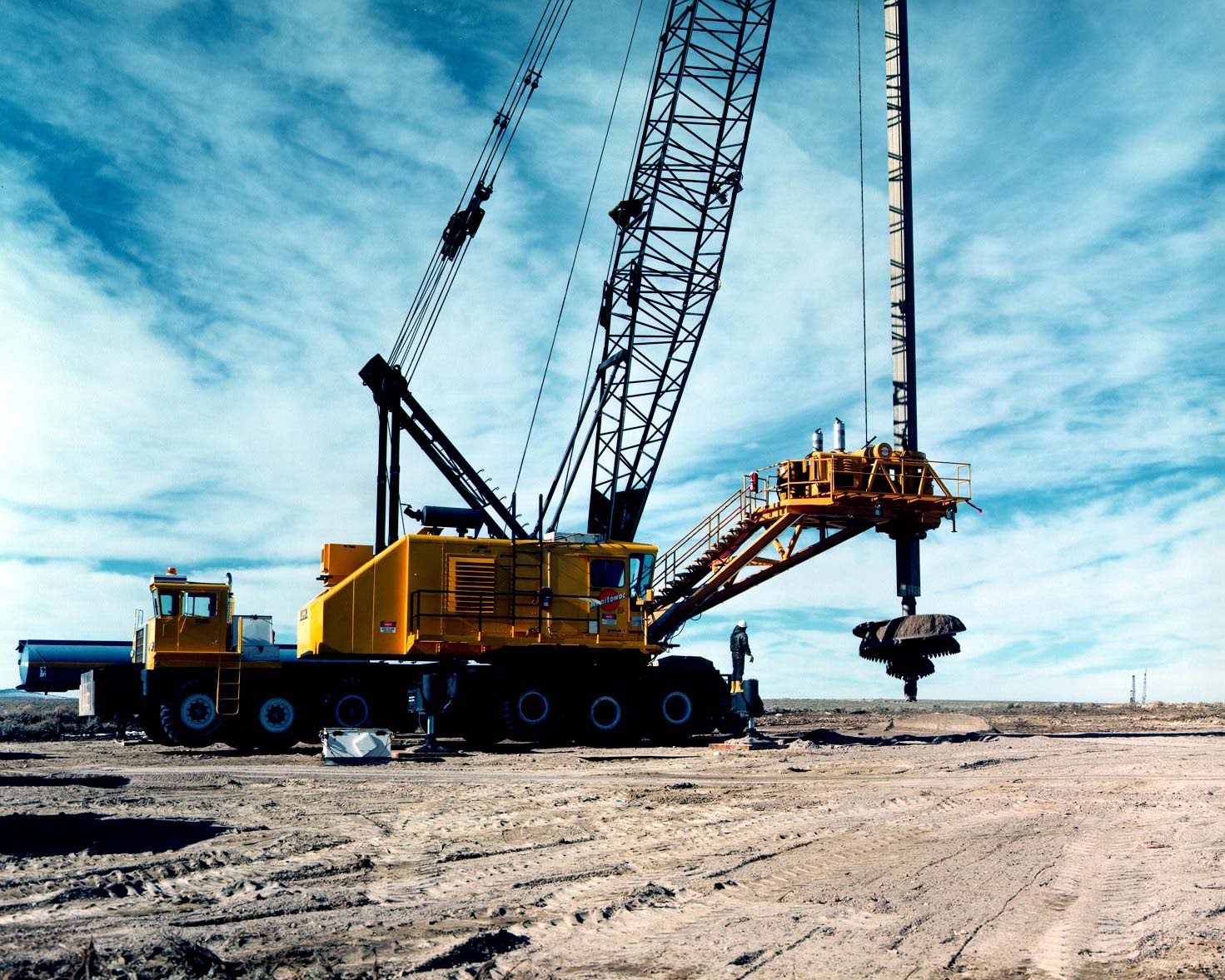
Advanced Drilling Operations & Risk Mitigation
Advanced Drilling Operations & Risk Mitigation Course Objective: This course is designed to equip drilling professionals and students with a deep understanding of real-world drilling challenges and troubleshooting techniques. Participants will explore various failure mechanisms, learn how to predict potential issues, and apply proven mitigation strategies. Through case studies, group exercises, and scenario-based discussions, the training builds practical insight to enhance operational safety, efficiency, and risk control on drilling rigs. Benefits of Learning in terms of career: • Strengthen your ability to identify and mitigate operational drilling risks in real-time. • Gain practical knowledge to prevent non-productive time (NPT) during drilling. • Improve career prospects in drilling operations, field supervision, and well engineering. • Prepare for advanced field roles in stuck-pipe prevention, well control, and troubleshooting. • Stand out in interviews and promotions with real-case-based technical exposure. Prerequisites For Students: • Basic understanding of drilling processes (Mud, BHA, Casing, etc.) • Final-year students or fresh graduates in Petroleum/ Mechanical Engineering For Professionals: • Prior exposure to well operations preferred but not mandatory Course Outline (Hands-On, Practical Focus) 1. Stuck Pipe Prevention o Recognizing stuck-pipe conditions & terminology o Using indicators & trend analysis to prevent incidents o Human factor & crew handover strategies o Group exercise: Solving stuck-pipe scenarios o Case-based learning from real incidents 2. Well Control o Fundamentals of primary, secondary & tertiary control o Unconventional challenges: String off-bottom, plugged strings, no pipe in hole o Dealing with kicks and clock issues 3. Wellbore Instability o Types & causes of wellbore instability o Controllable vs uncontrollable factors o Real-time indicators and failure mechanisms 4. Lost Circulation o Loss mechanisms, field indicators & damage control o Best practices for prevention 5. Hole Deviation (Vertical Drilling) o Recognizing deviation triggers o Understanding consequences o Prevention and correction measures 6. Hole Cleaning o Geometry influence o Importance and indicators o Immediate actions during poor hole cleaning 7. BHA Failure o Configuration insight & fatigue-related failure o Common failure mechanisms and mitigation 8. Mud and Cement Contamination o Real examples of contamination issues and field countermeasures. Learning Objectives By the end of this course, participants will:- ü Master the identification of early warning signs for stuck pipe, borehole instability, and lost circulation using real-time indicators. ü Gain hands-on understanding of well control techniques, including responses to unconventional well control situations. ü Learn practical troubleshooting skills for common drilling issues such as BHA failure, hole deviation, and mud contamination. ü Develop risk mitigation strategies to minimize Non-Productive Time (NPT) and operational hazards during drilling. ü Understand the human and operational factors that contribute to drilling failures - and how to manage them effectively. Frequently Asked Questions (FAQs) Who should attend this training? Final-year petroleum/mechanical students, junior drilling engineers, rig supervisors, and operations staff. Is there a certification? Yes, participants will receive a recognised certificate upon completion. Will I get hands-on learning? Yes, through group exercises, case studies, and practical scenarios. Is it beginner-friendly? Yes, if you have basic drilling knowledge or are a final-year student. Can international participants join? Absolutely! The training is open globally.

Oil & Gas Forecasting & Predictions Using Python
Course Benefits: · Live lectures from experienced professionals · Recorded session · Digital manuals · Field case studies · E-Certificates after an assessment test Course Objectives Facing the dilemma between resource shortage and environment destruction, numerous researches have been initiated within the field of energy study For example, confronted with the fast increase in energy demand caused by economy growth, energy security has become a quite important issue, and lots of researches tried to capture the main trend in energy development, involving the productions, consumptions and prices of various energy forms. The analysis of energy scenarios for future energy systems requires appropriate data. However, while more or less detailed data on energy production is often available, appropriate data on energy consumption is often scarce Time series analysis is a specific way of analysing a sequence of data points collected over an interval of time. In time series analysis, analysts record data points at consistent intervals over a set period of time rather than just recording the data points intermittently or randomly. PREREQUISITES v Will teach from scratch, so no perquisites as such required. v Having knowledge of data visualization, graphs and charts will be add on advantage. TOPICS TO BE COVERED w Introduction to time series data, and how it is different from normal data. We are already doing forecasting in our real life w Mathematics and Statistics relevant to forecasting a. Lag features b. Algebra, Calculus c. Outlier Removal w Terminology of time series a. Ts objects b. Time plots c. Seasonality d. Periodicity e. Trend f. White Noise g. Unit root h. Smoothening w Pandas with time series - datetime object w Introductory signal analysis a. Fourier Transforms: Taking time series data into frequency domain b. Recursion Plots c. Which spike is and anomaly w Getting Deeper into time series a. Differencing b. ACF and PACF c. Hypothetical tests d. Time series Data Analysis w Thinking of time series problem as a regression problem Statistical Models a. Auto Regression b. Moving Average c. ARIMA w Deep Learning for time series a. RNN b. LSTM w Advanced (Optional) a. Anomaly detection using Auto Encoders b. Isolation Forest Frequently asked questions(FAQs) Why to join this Course? § Practical Oriented Knowledige § Experienced Digital Experts § Flexible Leeming Model with recorded lectures § Certificate of Completion § Project of Completion What if I don't have any prior coding experience? Can I still join this course? Don't worry, well start from scratch. There is no requirement for prior experience. Will joining this program be beneficial to me because I am proficient in Python? This may help you readily comprehend the data science concepts underlying oil and gas applications. You will receive many data sets for practice and analysis. Will I get a certificate? Yes, you will receive a 6-week training certificate upon completion Asf the programme Will there be an assignment? Yes, we'll have assignments on weekly basis and final project at end of the program. Who can join this course? Undergraduate/Graduate or professional working in the energy sector

Power BI Analytics For Drilling Engineer
Course Introduction In today's data-driven oil and gas industry, the ability to analyze, visualize, and interpret drilling data is crucial. Power Bl, a leading business analytics tool, allows drilling engineers to transform raw data into meaningful insights. This 6-day course is designed to equip drilling professionals with the skills to utilize Power BI for enhanced operational efficiency and data-driven decision-making. Course Objectives By the end of this course, participants will: 1. Gain a deep understanding of Power BI and its relevance in drilling engineering. 2. Learn to clean, transform, and prepare drilling data for analysis. 3. Develop interactive dashboards to track drilling performance and well production. 4. Apply advanced data modeling and analytics techniques to solve real-world drilling challenges. 5. Build complete dashboards through hands-on projects based on real-life case studies. Learning Outcomes Participants will be able to: 1. Navigate Power BI’s interface and tools confidently. 2. Use Power Query to clean and transform drilling datasets. 3. Develop dashboards tailored to monitoring drilling KPIs like ROP, NPT, and cost per foot. 4. Perform advanced analytics using DAX to uncover operational insights. 5. Apply their skills to two real-world drilling case studies for impactful learning. Course Agenda 1. Power BI Basics for Drilling Engineers Course Kickoff o Introduction to Power BI in the context of drilling engineering. o Overview of course agenda and expectations. Power BI Interface Walkthrough o Navigation: Ribbon, Canvas, Fields, Visualizations. Building Your First Dashboard o Using mock drilling data to create visualizations (ROP trends, cost/ft). o Practical Exercise: Hands-on creation of a simple dashboard. 2. Preparing and Cleaning Drilling Data Introduction to Power Query o Exploring Power Query Editor: Managing missing values, removing duplicates. o Common transformations for drilling datasets. Connecting to Data Sources o Importing drilling data from Excel, SQL databases, and APIs. Practical Application o Cleaning and merging drilling logs with bit performance data. 3. Advanced Data Preparation and Dashboard Design Advanced Power Query Techniques o Data transformation for formation-based analysis. o Creating pivoted views for ROP comparisons. Building Comprehensive Dashboards o Slicers and filters for drilling datasets. o Visualizing well trajectories on maps. 4. Data Modeling and Introduction to DAX Power Pivot and Data Relationships o Linking data tables for drilling operations. o Practical: Setting up relationships between bit performance, formations, and costs. Introduction to DAX o DAX basics: Calculated columns, measures. o Creating simple KPIs (ROP, NPT percentages) Case Study o Using DAX to calculate operational efficiency metrics. 5. Advanced DAX Functions o FILTER, CALCULATE, RELATED for drilling analysis. o Time intelligence: Analyzing drilling progress over time. Project 1: Drilling Performance Analysis Dashboard · Objective: Monitor daily drilling performance (ROP, cost/ft, downtime). · Practical: Building an end-to- end dashboard. Project 2: Well Production Monitoring Dashboard · Objective: Monitor and optimize well production (cumulative production, decline trends). · Practical: Integrating maps, advanced visuals, and custom KPIs. FAQs 1. Who should attend this course? This course is designed for drilling engineers, petroleum engineers, and professionals involved in drilling operations who want to enhance their data analysis and visualization skills. 2. What prior knowledge is required? No prior experience with Power BI is necessary. Basic familiarity with drilling operations and data analysis concepts will be beneficial. 3. What tools will I need? Participants will need a computer with Power BI Desktop installed (free version) and access to sample drilling datasets provided during the course. 4. Will there be practical sessions? Yes, the course is hands-on, with real-world drilling projects integrated into the training agenda. 5. Will I receive a certificate? Yes, participants who complete the course will receive a certificate of completion.

AI Powered Excel Automation for Oil & Gas
Course Objective This training is designed to equip oil & gas professionals with next-generation Al skills to automate repetitive, time-consuming Excel workflows using intelligent tools and macros. From cleaning raw well data to auto-generating dashboards, participants will gain hands-on expertise in Al-driven pattern recognition, data extraction, and analytical automation tailored to subsurface and production workflows. Prerequisites · Basic Excel proficiency is expected. · Freshers with a petroleum or data-related background can follow the Al techniques with ease, while industry professionals will learn how to optimize workflows and reduce manual effort using real oilfield datasets. Deliverables ü Lifetime access to recorded sessions ü Downloadable Excel templates & scripts ü Real oilfield datasets for hands-on learning ü Certificate of Completion ü Access to prompt libraries for Al-powered workflows ü Final automation project for practice. Course Outline o Data Cleaning o Data Extraction o Pattern recognition with AI o Automating Oilfield data analysis with AI. o Automating Repetitive tasks and complex formula with AI, Macros and Custom Scripts. Learning Benefits § Gain niche AI-for-Oilfield Excel skills rarely taught in formal petroleum training § Automate repetitive reporting, freeing up hours per week in field jobs § Improve data accuracy and speed using AI-based validation and extraction § Stand out in digital transformation teams for upstream Operations § Leverage OCR, entity recognition, and pattern classification in oil & gas documents FAQs 1. Is this course beginner-friendly? Yes. Anyone with basic Excel knowledge can easily follow. Al tools will be demonstrated live. 2. Will I receive recorded sessions? Yes, all sessions are recorded and accessible for lifetime review. 3. What tools will I learn to use? Pre-built Al tools (OpenAI, OCR tools, formula generators, and macros), smart Excel plugins, and prompt-based interfaces. 4. What kind of documents and data will we work with? Well logs, drilling reports, PDFs, scanned documents, HSE reports, equipment lists, and maintenance summaries. 5. Is coding knowledge required? No coding needed. Scripts and macros will be provided in a plug-and-play format. 6. Will there be a practical project? Yes, participants will automate a sample oilfield reporting workflow end-to-end. 7. What's included in the deliverables? Templates, practice datasets, Al tool links, macro sheets, and a project certificate. 8. How is this different from regular Excel courses? It's specialized for oil & gas, and integrates Al + automation, making workflows faster, smarter, and less error-prone.
Big Data Analytics & Machine Learning for Smarter Production Facilities Operations
Course Objective: This training aims to equip participants with the knowledge and skills necessary to leverage big data analytics. By integrating advanced analytics and machine learning algorithms, participants will learn how to enhance monitoring, prediction, and maintenance processes, ultimately leading to smarter and more efficient production operations. Learning Objectives: · Utilize analytics tools to monitor and report on facilities operations effectively. · Apply machine learning techniques for enhancing pipeline integrity and detecting anomalies. · Implement predictive analytics models to ensure flow assurance in production facilities. · Implement smart condition monitoring techniques for predictive maintenance of oilfield equipment. · Deploy virtual flow metering solutions using machine learning algorithms for precise measurement. Topics to be covered: 1. Analytics for Monitoring and Reporting Facilities Operations 2. Enhancing Pipeline Integrity with Machine Learning 3. Predictive Analytics for Flow Assurance in Production Facilities 4. Predictive Maintenance & Smart Condition Monitoring of Oilfield Equipment 5. Virtual Flow Metering & Precision Measurement with Machine Learning Benefits of Joining in Terms of Career Growth: Skill Enrichment: Develop proficiency in big data analytics and machine learning, enriching your skill set and boosting your attractiveness to employers in today's competitive job market Career Expansion: Expand your career horizons & explore new opportunities across various sectors by mastering cutting-edge techniques for optimizing production operations. Professional Development: Elevate your professional standing and unlock advancement opportunities by demonstrating expertise in data-driven decision-making and innovative problem-solving. Job Security: Safeguard your career against technological shifts and market changes by cultivating in-demand skills, ensuring greater resilience and stability in your chosen field. FAQs What is the focus of the training? The training focuses on integrating big data analytics & ML techniques to optimize production facility operations for enhanced efficiency & productivity. Who is this training designed for? This training is designed for New Learners and enthusiasts in the fields of manufacturing, production, engineering, data analytics, and machine learning who aim to leverage data-driven insights to streamline operations. What is the duration of the training? The training spans over 20+ hours of comprehensive content, ensuring a deep dive into the subject matter for thorough understanding and skill development. What is included in the training package? The package includes both live sessions and recordings, allowing participants to attend sessions in real-time or catch up at their convenience. Additionally, participants receive advanced study materials for continued learning and reference. How will this training benefit me professionally? By completing this training, participants gain valuable skills in big data analytics and machine learning tailored for production facilities, enhancing their career prospects and enabling them to contribute effectively to optimizing operations in their respective industries. What kind of support is available after the training? Participants receive career assistance to help them apply their newly acquired skills in the professional realm, including guidance on job opportunities, networking, and leveraging their expertise effectively. Will I receive a certificate upon completion? Yes, participants who successfully complete the training will receive a certificate.
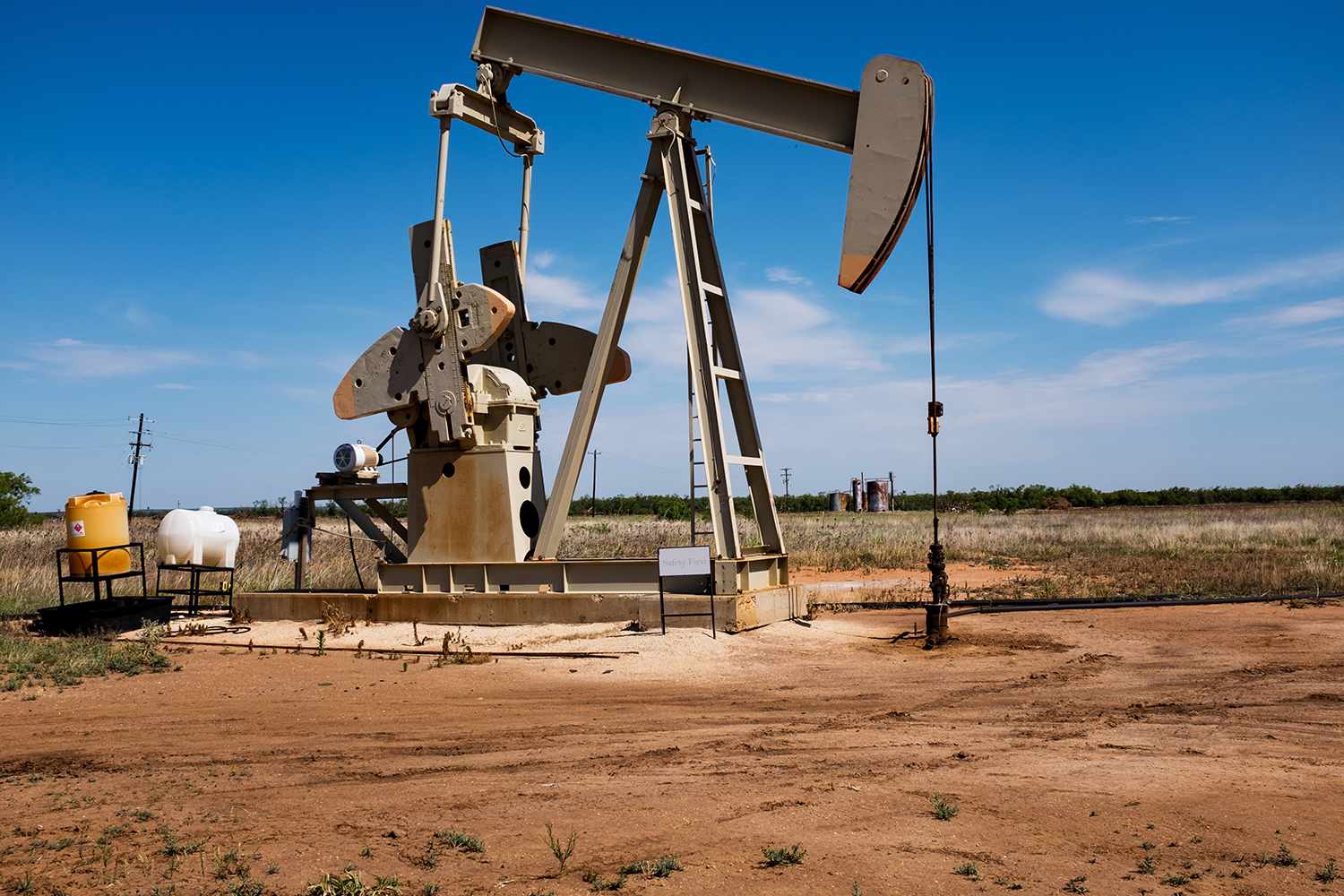
Production and Nodal Analysis with Python & ML
COURSE OVERVIEW This intensive 10+ hours training is designed to bridge petroleum engineering fundamentals with modern computational techniques. Participants will gain hands-on exposure to Python programming, machine learning workflows, and practical applications in production engineering-ranging from inflow-outflow modelling to nodal analysis and flow assurance. Prerequisites No prior advanced knowledge required. Basic exposure to petroleum engineering or programming is helpful but not mandatory this course caters to both new learners and experienced professionals. Course Contents · Python for Oil and Gas Applications · Machine Learning for Production Data · Production Analysis &Nodal Analysis · Flow Assurance & Applications Learning Objectives in Terms of Career · Boost Employability · Advance Career Roles · Industry-Relevant Skills · Advance Career Roles · Future-Proof Expertise FREQUENTLY ASKED QUESTIONS Who can attend this training? Petroleum engineers, production engineers, reservoir engineers, data scientists in oil & gas, and students aspiring to enter the energy sector. Do I need prior Python knowledge? No, the training starts from basics and builds up to advanced oil & gas applications. Is this training hands-on or only theory? The course is designed with 50% practical sessions, including group exercises and case studies. Will real oil & gas datasets be used? Yes, participants will work with real-world production datasets for practice. What software/tools are required? Python (Anaconda/Spyder/Jupyter), libraries like Pandas, NumPy, Scikit-learn, and Matplotlib. Installation guidance will be provided. Will I get course material and codes? Yes, participants receive datasets, Python scripts, and learning resources for future use.

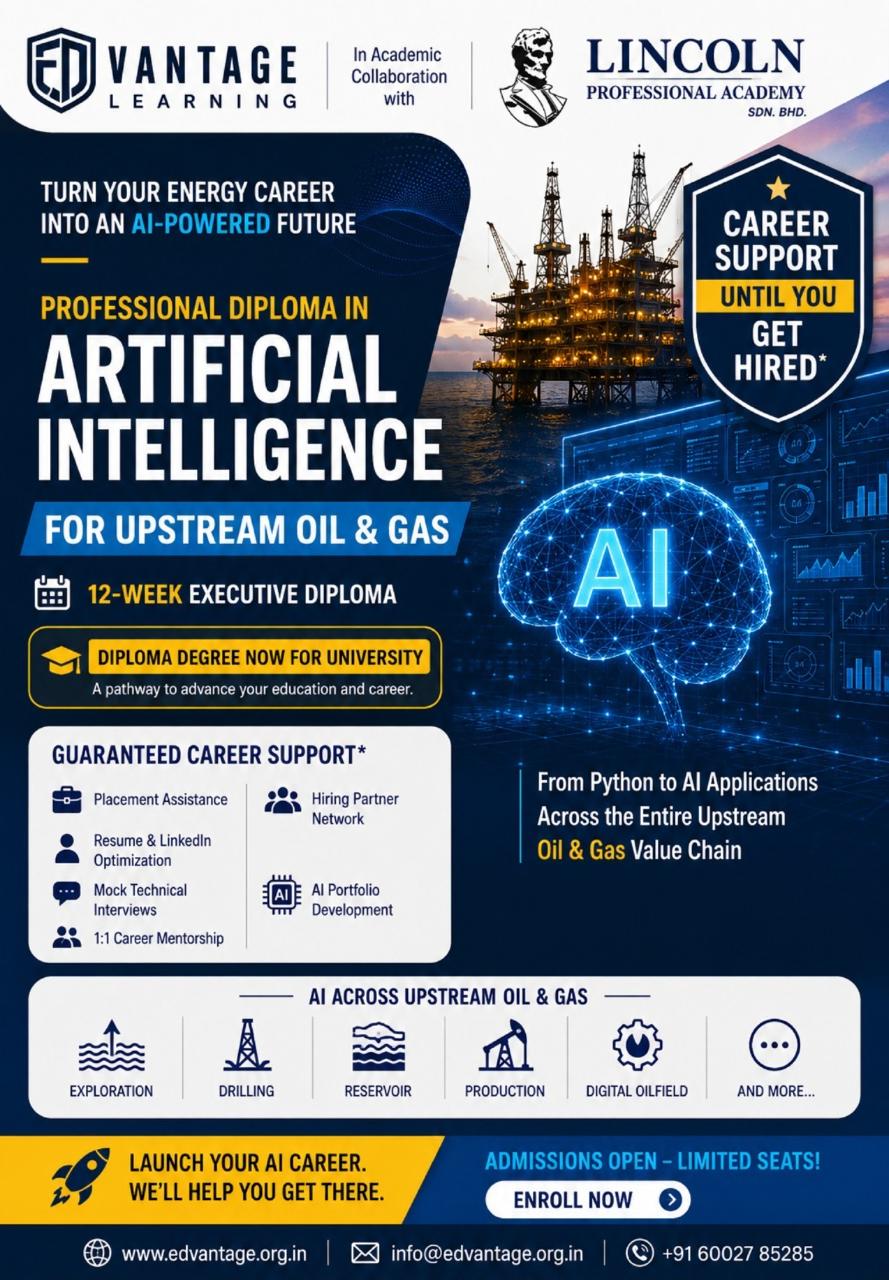
Our Alumni Work At Top Companies
Trusted by Industry Leaders